
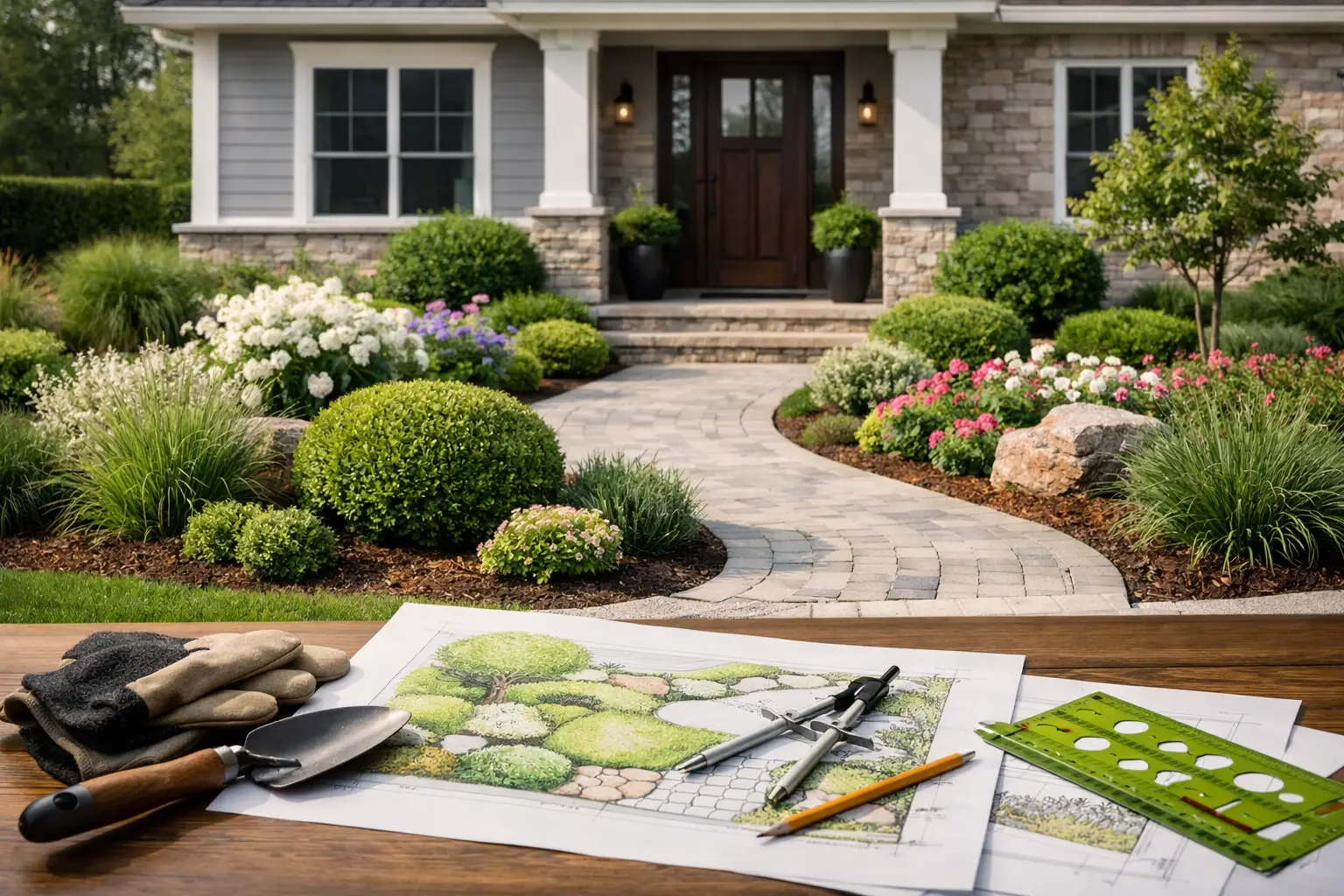
A front yard usually tells the whole story before anyone reaches the door. If the walkway feels awkward, the planting hides the architecture, or drainage leaves stains and washouts near the entry, the home never presents at its full value. That is why understanding how to landscape design front of house means looking beyond decorative planting and treating the entry sequence, grading, hardscape, lighting, and planting as one coordinated composition.
For high-value homes, the front landscape has a specific job. It should frame the architecture, guide arrival, soften the built form, and perform reliably in every season. The best results are rarely the product of adding shrubs at the foundation and calling it finished. They come from design discipline, proportion, and technical planning.
How to landscape design front of house starts with the architecture
Front-of-house landscape design should never compete with the residence. It should support the style, scale, and geometry of the home so the property reads as a complete design rather than a building with landscaping attached afterward.
A formal house typically benefits from clear symmetry, axial walks, defined hedging, and a controlled planting palette. A more contemporary residence may call for stronger negative space, fewer species, sculptural massing, and precise hardscape lines. Coastal and transitional homes often need a lighter hand, where planting layers provide texture and movement without obscuring key architectural elements.
This is often where homeowners make an expensive mistake. They choose plants they like individually without first establishing the visual structure of the front yard. A front elevation with strong columns, large windows, and a centered entry needs a different landscape response than a low horizontal facade with an offset drive court. Good design begins with the building lines, not the nursery inventory.
Organize the front yard around arrival and visibility
The front yard should make arrival intuitive. Guests should understand where to drive, where to walk, and where the front door is from the moment they approach the property. If the sequence is unclear, the landscape is not doing its job.
This usually starts with circulation. The driveway, walk, guest parking, and entry steps need to work together visually and practically. A straight walk can feel formal and decisive. A widened or gently curved path can slow the approach and create more usable planting space. The right answer depends on the house and lot geometry.
Visibility matters just as much. The front door should feel discovered, not hidden. That does not mean every facade needs a spotlight effect. It means the eye should be led with intention through paving lines, planting masses, low walls, or lighting. If mature shrubs block windows, signs, or entry features, the landscape may be adding bulk rather than value.
In many cases, less is stronger. Oversized planting packed too close to the house often makes a custom residence look smaller and more congested. Controlled spacing, generous bed lines, and selective layering usually produce a more refined result.
Think in layers, not individual plants
A strong front landscape usually has a foreground, middle layer, and backdrop. Groundcovers and low edging define bed lines and clean transitions. Mid-height planting creates fullness and rhythm. Vertical elements such as palms, multi-trunk specimens, or accent trees establish scale and identity.
What matters is massing. Repetition of shapes and textures creates order. Too many one-off choices create visual noise. On larger homes especially, broader sweeps of material often look more intentional than a collection of unrelated ornamental pieces.
Grading and drainage should be part of the design, not an afterthought
One of the clearest differences between amateur landscaping and professionally planned landscape architecture is what happens below the surface. A front yard can look impressive on installation day and still fail quickly if grading and drainage were not resolved early.
The area near the front of the house is often asked to do several things at once. It may need to receive roof runoff, support hardscape, preserve finished floor elevations, and protect the foundation while still appearing clean and welcoming. If water collects near entry paving, planting beds, or driveway edges, the design is incomplete.
This is especially relevant in Florida, where intense rainfall and flat site conditions can turn minor grading errors into standing water, erosion, or hardscape settlement. A proper front-of-house design evaluates slope, drainage paths, stormwater handling, and the relationship between paving elevations and planting areas before materials are selected.
That technical layer affects aesthetics more than many people realize. Bed heights, curb relationships, step transitions, and turf areas all depend on sound grading. When those moves are coordinated, the front yard looks effortless. When they are not, even premium materials can appear unresolved.
Hardscape sets the framework
If planting supplies softness and seasonal character, hardscape supplies order. Walkways, driveways, entry pads, walls, curbs, steps, and edging establish the bones of the front landscape. Their proportions and detailing influence the property’s overall quality as much as the planting plan does.
Material selection should relate directly to the home. Clean-cut large format pavers may complement a modern facade. Tumbled stone or a more textured surface may better suit Mediterranean or transitional architecture. The goal is not just visual match. It is consistency of scale, finish, and installation quality.
Driveway design deserves special attention because it occupies so much of the front elevation. Width, turning movement, border treatment, and paving pattern all affect curb appeal. On custom homes, a driveway should feel integrated with the site plan rather than simply engineered to fit cars.
It also needs restraint. Decorative overstatement can date a home quickly. Strong front landscapes often use a limited material palette and rely on detail, proportion, and craftsmanship to create impact.
Plant for scale, maintenance, and climate reality
A common question in how to landscape design front of house is which plants to use. The better question is how those plants will perform at maturity and how they support the composition over time.
Plant selection should account for mature size, root behavior, sun exposure, irrigation needs, salt tolerance where relevant, and maintenance expectations. Small plants installed too tightly may look full in the short term but require constant pruning and eventual replacement. That approach often weakens the original design.
For refined front yards, planting should be selected as living architecture. Hedges define edges and reinforce order. Accent specimens create focal points. Groundcovers reduce visual clutter and help unify larger beds. Flowering material can add seasonal interest, but it should not carry the entire design.
There is also a practical trade-off between lushness and upkeep. Rich, layered planting can feel luxurious, but only if it is supported by a realistic maintenance plan. For some properties, a more edited palette with fewer species and stronger massing will hold its appearance better and preserve design intent with less intervention.
Lighting should support architecture and safety
Exterior lighting is often underdesigned in front yards. Done well, it extends the architecture into the evening, improves safety, and gives the home a composed nighttime presence.
The goal is balance. Entry walks and steps need adequate illumination. Key architectural elements may deserve subtle emphasis. Specimen trees or layered planting can add depth. But overlighting creates glare, flattens the facade, and cheapens the experience.
A professionally considered lighting plan accounts for beam spread, fixture placement, concealment, and how light interacts with paving, planting, and the home itself. It is a design tool, not just an accessory.
How to landscape design front of house for long-term value
The strongest front-yard designs are not built around first impressions alone. They are planned for durability, growth, and stewardship. That means asking what the landscape will look like in three years, five years, and ten years, not just on install day.
This is where documentation and oversight matter. Planting plans, irrigation design, hardscape detailing, and construction coordination help preserve quality from concept to completion. Without that level of control, even a promising design can be diluted during bidding, substitution, or installation.
For homeowners and builders working on custom properties, that process discipline is often the difference between an attractive yard and a front landscape that truly elevates the residence. Firms such as Nova LA Designs approach front-of-house design as part of the larger site strategy, combining visual composition with grading, drainage, and construction precision so the result performs as well as it presents.
A well-designed front landscape should feel resolved, not busy. It should make the home look more valuable, move people naturally to the entry, and age gracefully as the property matures. If you are planning changes at the front of a house, start with the structure of the site and the architecture, then let every plant, material, and detail earn its place.
thanks for info.