
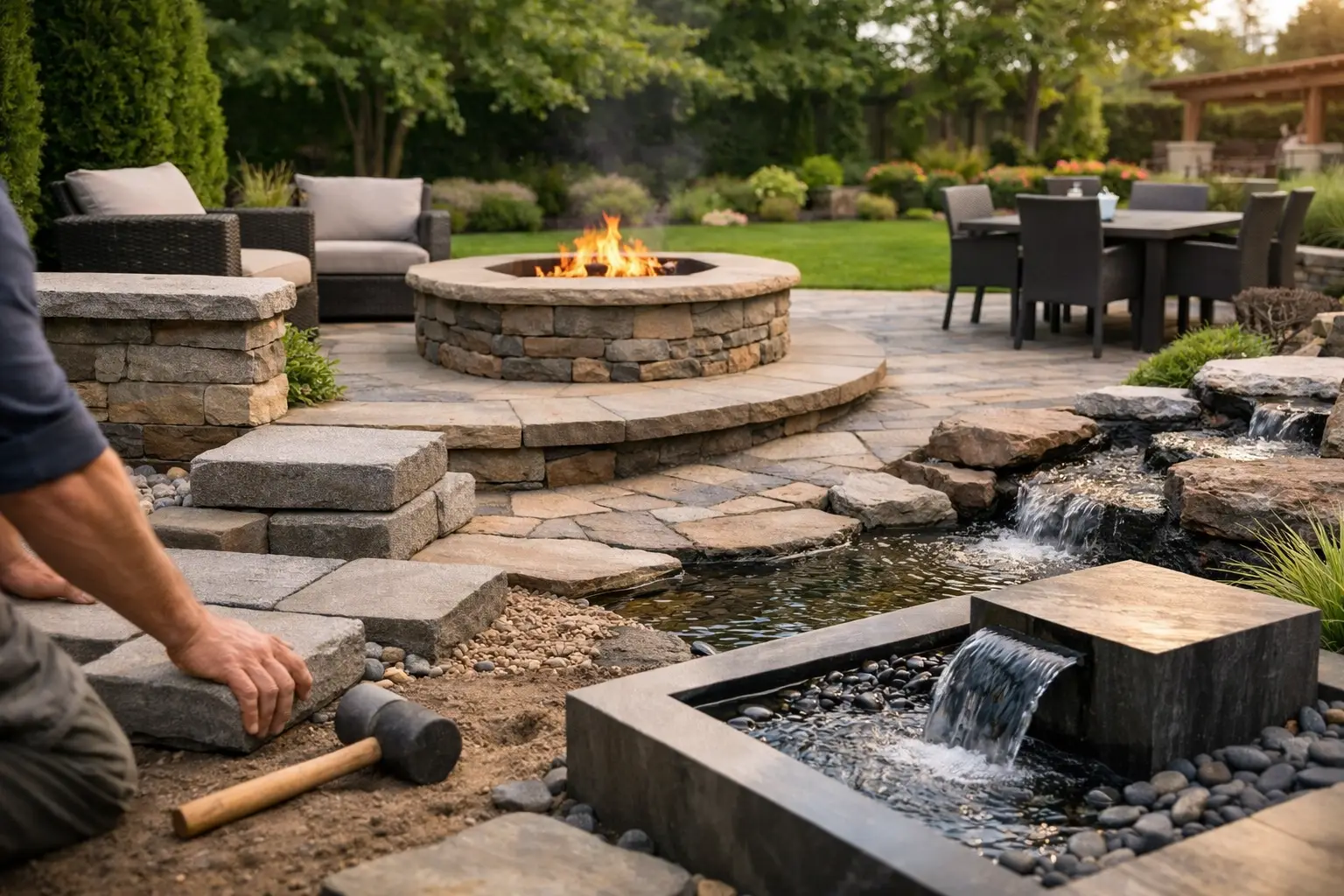
A luxury outdoor space rarely feels elevated because of plants alone. The difference usually comes from the elements that give the property structure, movement, and permanence. If you are asking what is hardscape design, the short answer is this: it is the planning and design of the built features in a landscape, including patios, walkways, driveways, walls, steps, pool decks, outdoor kitchens, fire features, and other non-living materials that organize how the site looks and functions.
That definition is simple, but the real value of hardscape design is in how those elements work together. A well-designed hardscape does not just fill space with pavers or stone. It solves practical site issues, supports architecture, manages circulation, and creates a finished outdoor environment that feels intentional from every angle.
What hardscape design includes
Hardscape design covers the permanent or semi-permanent constructed parts of a landscape. These are the surfaces and structures that shape outdoor use long before plant material matures. On a residential property, that may include a motor court, front entry walk, driveway, pool terrace, retaining wall, garden walls, terraces, seat walls, steps, edging, pergola foundations, or specialty paving patterns.
In higher-end projects, hardscape design often extends well beyond surface selection. It includes layout geometry, grading transitions, drainage strategy, material compatibility, joint patterns, border treatments, lighting integration, and the relationship between built features and the home itself. In other words, it is not just choosing stone. It is deciding exactly where that stone should go, how it should be detailed, and what technical demands it must meet over time.
What is hardscape design really doing on a property?
At its best, hardscape design gives a site order. It directs how people arrive, where they gather, how they move, what they see, and how the landscape performs after heavy rain, daily use, and years of exposure.
A front approach is a good example. The right hardscape design can make an entry sequence feel composed and welcoming, while also handling drainage, accommodating vehicles, and establishing proportion against the house. The same is true in the rear yard. A pool deck, dining terrace, and garden path may look effortless when finished, but that outcome depends on careful planning of elevation, spacing, access, and material transitions.
This is where design quality becomes visible. A hardscape can be expensive and still feel unresolved if it ignores scale, circulation, or drainage. On the other hand, a disciplined design can make every square foot work harder while still reading as refined.
Hardscape design is not the same as hardscape installation
This distinction matters, especially on custom residential projects. Hardscape installation is the physical construction of patios, walls, paving, and site features. Hardscape design is the planning that determines what gets built, where it goes, and how it should function.
Without design, construction decisions often happen too late and too quickly. Materials may be selected before grades are resolved. A walkway may look attractive on plan but feel awkward in real use. A retaining wall may address an elevation problem but create a visual one. These issues are common when hardscape is treated as a product selection exercise instead of a design discipline.
A complete hardscape design process typically addresses dimensions, elevations, drainage, materials, edge conditions, construction detailing, and the way each feature connects to architecture and planting. On larger or more technical properties, that may also include construction documents and coordination with architects, engineers, pool designers, and builders.
Why hardscape design matters so much in Florida
Climate and site conditions make hardscape planning especially important in Florida. The visual side matters, of course, but performance matters just as much. Heat, intense sun, stormwater, salt exposure in coastal areas, and flat or challenging grades all affect how outdoor spaces should be designed.
For example, the most attractive paving material is not always the best choice if it becomes too hot underfoot, stains easily, or performs poorly in wet conditions. Likewise, a perfectly level terrace may sound ideal until drainage problems appear during a summer storm. On many properties, proper hardscape design is what allows beauty and durability to coexist.
That is one reason experienced landscape architects approach hardscape as part of the full site system. Paving patterns, slope, drainage collection, retaining conditions, irrigation coordination, and surrounding planting all need to be considered together. Solving one issue in isolation can create two more if the broader site plan is ignored.
The relationship between hardscape and softscape
Homeowners often hear the terms hardscape and softscape together. Softscape refers to the living components of the landscape, such as trees, shrubs, groundcovers, and lawn areas. Hardscape design creates the framework that allows softscape to succeed.
A strong landscape usually needs both. Too much hardscape can make a property feel harsh or overbuilt. Too little can leave it visually loose, hard to navigate, or difficult to maintain. The right balance depends on architecture, lot size, intended use, and the owner’s priorities.
On a contemporary home, the hardscape may take a more architectural role with crisp geometry and restrained planting. On a more traditional estate property, hardscape may be quieter, allowing planting and garden spaces to carry more of the visual richness. Neither approach is automatically better. What matters is that the hardscape supports the style of the property instead of competing with it.
Good hardscape design starts with function
Many people first think about appearance, which is understandable. Stone, pavers, shell aggregate, concrete finishes, and specialty materials all shape the visual character of an outdoor space. But the design process should start with function.
How do people arrive at the home? Where do guests park? Is there a comfortable path from the driveway to the entry? Does the pool terrace have enough room for lounging and dining without feeling crowded? Are steps safe and proportional? Can service access happen without disrupting primary views? Does stormwater move away from structures and usable areas?
These questions often determine the success of a project more than the material palette alone. Beautiful hardscape that does not fit how a property is used will eventually feel disappointing. Well-planned hardscape tends to feel obvious in hindsight because it removes friction from everyday living.
Material selection is only one layer
When clients ask what is hardscape design, they are sometimes really asking which material they should choose. Material selection matters, but it is one part of a larger design problem.
A limestone terrace, for instance, may look elegant, but the final result depends on module size, joint spacing, border design, transition details, edge restraint, and how that surface meets adjacent steps, planting beds, or the pool coping. The same material can feel understated and sophisticated in one setting or heavy and out of scale in another.
This is why custom hardscape design benefits from technical precision. Material choices should reflect not just style preference, but climate exposure, maintenance expectations, slip resistance, installation requirements, and the overall architecture of the project.
Common hardscape design mistakes
The most common mistake is treating the site as a collection of separate features rather than one connected composition. A driveway gets designed one way, the pool deck another, and the entry walk another, with no unifying language. The result can feel fragmented even when each element is individually attractive.
Another issue is underestimating grading and drainage. Water management is not a background detail. It is fundamental to whether the hardscape performs. Poor slopes, low spots, or uncoordinated drain placement can compromise both appearance and longevity.
Scale is another frequent problem. Oversized paving areas can make a residence feel exposed, while undersized terraces limit furniture layout and circulation. There is no universal formula. The right answer depends on the house, the site, and how the outdoor spaces are meant to function.
When to involve a landscape architect
If a project includes multiple outdoor rooms, changes in grade, drainage concerns, coordination with new construction, or a substantial investment in paving and site features, it makes sense to involve a landscape architect early. This is particularly true when the goal is not just installation, but a coherent outdoor environment that adds long-term value to the property.
A professional design process brings clarity before construction begins. It helps align vision, budget, technical requirements, and detailing so the finished work reflects the original intent. Firms such as Nova LA Designs approach hardscape design as part of the broader landscape architecture process, where aesthetics, site engineering, and construction documentation all support the final result.
For discerning homeowners and project teams, that level of planning is rarely excessive. It is usually what prevents expensive revisions, visual inconsistencies, and performance issues later.
Hardscape design is ultimately about giving a property structure that feels as considered as the home itself. When done well, it is quiet, disciplined, and highly functional – the kind of design you notice not because it calls attention to itself, but because everything about the landscape feels resolved.