
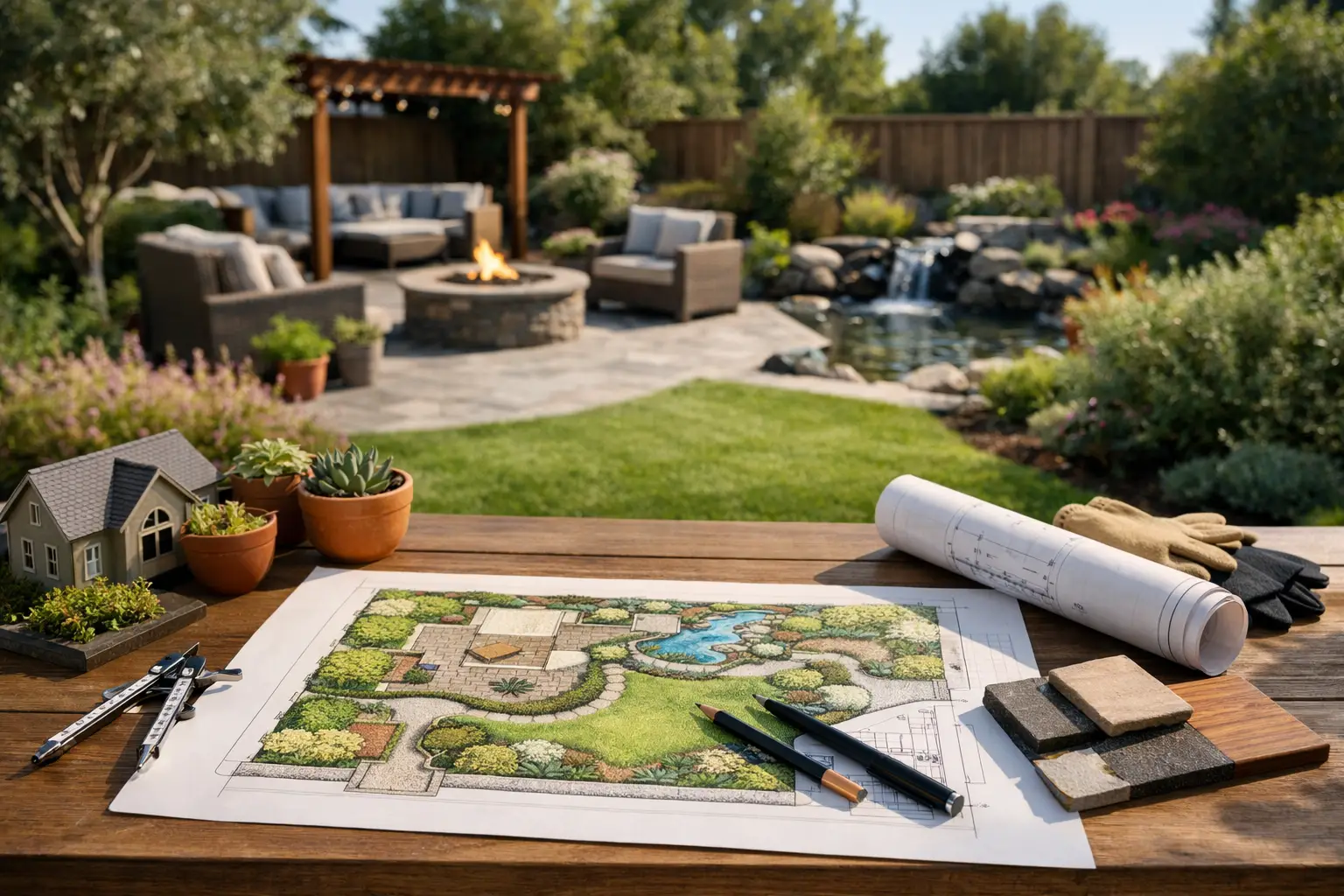
A backyard usually starts revealing its problems the moment you try to use it. The patio is too small for entertaining. Drainage pushes water toward the house. Planting feels disconnected from the architecture. What looks like a simple question – how to landscape design backyard spaces well – quickly becomes a matter of planning circulation, grading, structure, and long-term performance.
For high-value residential properties, backyard design is not just about adding plants or selecting pavers. It is about shaping outdoor space so it functions as an extension of the home. The best results come from balancing visual composition with technical discipline, because a beautiful plan that ignores drainage, sun exposure, maintenance, or construction realities rarely holds up.
How to landscape design backyard spaces starts with the site
Every successful backyard plan begins with a clear reading of the property. Before choosing materials or plant palettes, study how the site behaves. Notice where water collects after rain, where the sun is strongest in the afternoon, which views deserve emphasis, and which neighboring structures should be screened.
Grade changes matter more than many homeowners expect. Even subtle elevation differences affect drainage, usable lawn area, deck or patio transitions, and the feasibility of features such as pools, spas, fire elements, or garden walls. If the property has existing drainage issues, they should shape the design early rather than be treated as an afterthought.
Architecture should lead the conversation as well. A backyard attached to a clean-lined contemporary home calls for different geometry, materials, and planting rhythm than one paired with a Mediterranean or coastal estate. When the landscape feels disconnected from the residence, the entire property reads as fragmented.
Define how the backyard needs to work
A well-designed backyard does not try to do everything everywhere. It assigns purpose to space. That means deciding how the area will actually be used on an ordinary week, not just during occasional gatherings.
Some clients need a quiet garden with strong privacy and minimal upkeep. Others want an entertainment-focused layout with an outdoor kitchen, dining terrace, poolside lounge areas, and integrated lighting. Families may prioritize open turf, durable surfaces, and safe transitions, while empty nesters may value layered planting, sculpture, water features, and seating destinations.
This is where trade-offs begin. Expanding hardscape creates more room for entertaining, but it can reduce softness and increase heat reflection. Large planting beds add richness and screening, but they require irrigation strategy and maintenance access. A generous lawn offers flexibility, but in many cases it is not the most refined or water-conscious use of premium space.
The right answer depends on the property, the architecture, and the owner’s expectations. Good design is not about maximizing every feature. It is about editing with discipline.
Build the backyard in layers, not as isolated features
One of the most common mistakes in backyard planning is treating the project as a collection of separate purchases. A patio is added first, then a few palms, then lighting, then perhaps a pergola or fire pit. The result is often expensive but visually disjointed.
A stronger approach is to design in layers. Start with space planning and circulation. Determine where people arrive, where they gather, and how they move between the house, pool, lawn, garden, and secondary seating areas. Then establish the hardscape framework that supports those movements.
After that, shape the vertical structure. This may include privacy walls, hedges, trees, trellises, or architectural planting that frames views and gives the yard a sense of enclosure. Finally, refine the planting, lighting, and material detailing that bring texture and finish to the composition.
When these layers are considered together, the backyard feels intentional. It also tends to perform better during construction because the drainage, irrigation, elevations, and material transitions have been coordinated from the start.
Hardscape should organize the design
In luxury residential work, hardscape often does more than any single planting decision to establish quality. Patios, walks, walls, steps, drive connections, pool decks, and built-in features set the structure of the backyard and determine how comfortably it can be used.
Scale is critical. A terrace that looks generous on paper can feel tight once furniture is placed. Steps that are technically compliant can still feel awkward if they do not align with primary circulation routes. Materials must also relate to the home. A backyard design gains credibility when the stone, pavers, concrete finishes, and edge details feel architecturally grounded rather than decorative.
This is also where technical precision matters. Surface slopes need to move water properly without making outdoor living areas uncomfortable. Material joints, coping details, and transitions to planting beds should be resolved before construction. High-end landscapes lose their refinement quickly when detailing is left vague.
Planting should support architecture and climate
Planting is often where homeowners focus first, but it works best when it supports the broader design framework. The role of planting is not simply to fill space. It should reinforce structure, soften built elements, frame views, create privacy, and provide seasonal texture and color in a controlled way.
In Florida, climate responsiveness matters. Heat, humidity, salt exposure in some locations, and intense seasonal rainfall all affect plant performance. A plant palette should reflect not just aesthetic preference but actual site conditions and maintenance tolerance. Exotic visual impact may be appealing, but if the material struggles in the setting or requires constant replacement, it is not a sound design decision.
Composition matters as much as species selection. Strong planting design relies on massing, repetition, contrast, and scale. Too many varieties can make a landscape feel restless. Too few can make it feel flat. The most effective plans create rhythm without looking formulaic.
Drainage and irrigation are design issues
Homeowners often think of drainage and irrigation as technical line items rather than central design concerns. In reality, both influence the quality and longevity of the entire backyard.
Poor drainage affects turf health, planting success, paving performance, and even the experience of using the yard after a storm. Water should be directed intentionally through grading, collection points, and subsurface systems where needed. On more complex properties, this work should be documented carefully rather than improvised in the field.
Irrigation deserves the same level of forethought. Different planting zones have different water needs, and coverage should reflect sun exposure, soil conditions, and plant type. Overwatering is just as damaging as underwatering. A refined backyard does not merely look finished at installation. It is set up to mature well over time.
How to landscape design backyard projects with construction in mind
A design that cannot be built efficiently is not a complete design. Backyard projects involve coordination between landscape architects, contractors, pool builders, engineers, masons, lighting specialists, and sometimes architects or municipal reviewers. The more investment involved, the more documentation and oversight matter.
That is why construction documents, grading plans, material schedules, and dimensional clarity are so valuable. They reduce guesswork, protect design intent, and help maintain quality from bidding through installation. Three-dimensional visualization can also be useful, especially when clients are evaluating scale, spatial relationships, and sight lines before work begins.
This level of planning is particularly important when the backyard includes multiple integrated features. An outdoor kitchen affects utilities. A retaining wall affects drainage and structural engineering. A new pool deck can change elevations at doors and adjacent terraces. Each decision influences another.
For clients undertaking custom residential work, a professionally led process often saves money in the long run because it limits revisions, avoids field conflicts, and produces a more coherent final result.
Know when a simple backyard plan is not enough
Some backyard projects are straightforward. Others only appear straightforward until excavation starts or materials are ordered. If the project includes significant grade changes, drainage concerns, custom hardscape, integrated pool areas, permitting complexity, or a need to align with high-end architecture, professional design becomes less of a luxury and more of a practical necessity.
That does not mean every yard needs a grand gesture. It means the plan should match the stakes of the property. On a multimillion-dollar residence, loosely arranged planting and generic paving rarely support the value of the home. Precision becomes part of the design language.
Firms such as Nova LA Designs approach backyard planning as both creative and technical work, which is often the difference between a space that photographs well on completion day and one that continues to perform beautifully years later.
The best backyard landscapes do not feel overdesigned. They feel resolved. Every terrace, planting mass, elevation change, and drainage decision contributes to a space that looks calm because it has been thought through carefully. If you are deciding how to landscape design a backyard, start by treating the project as a complete environment, not a series of attractive parts. That is where lasting value begins.