
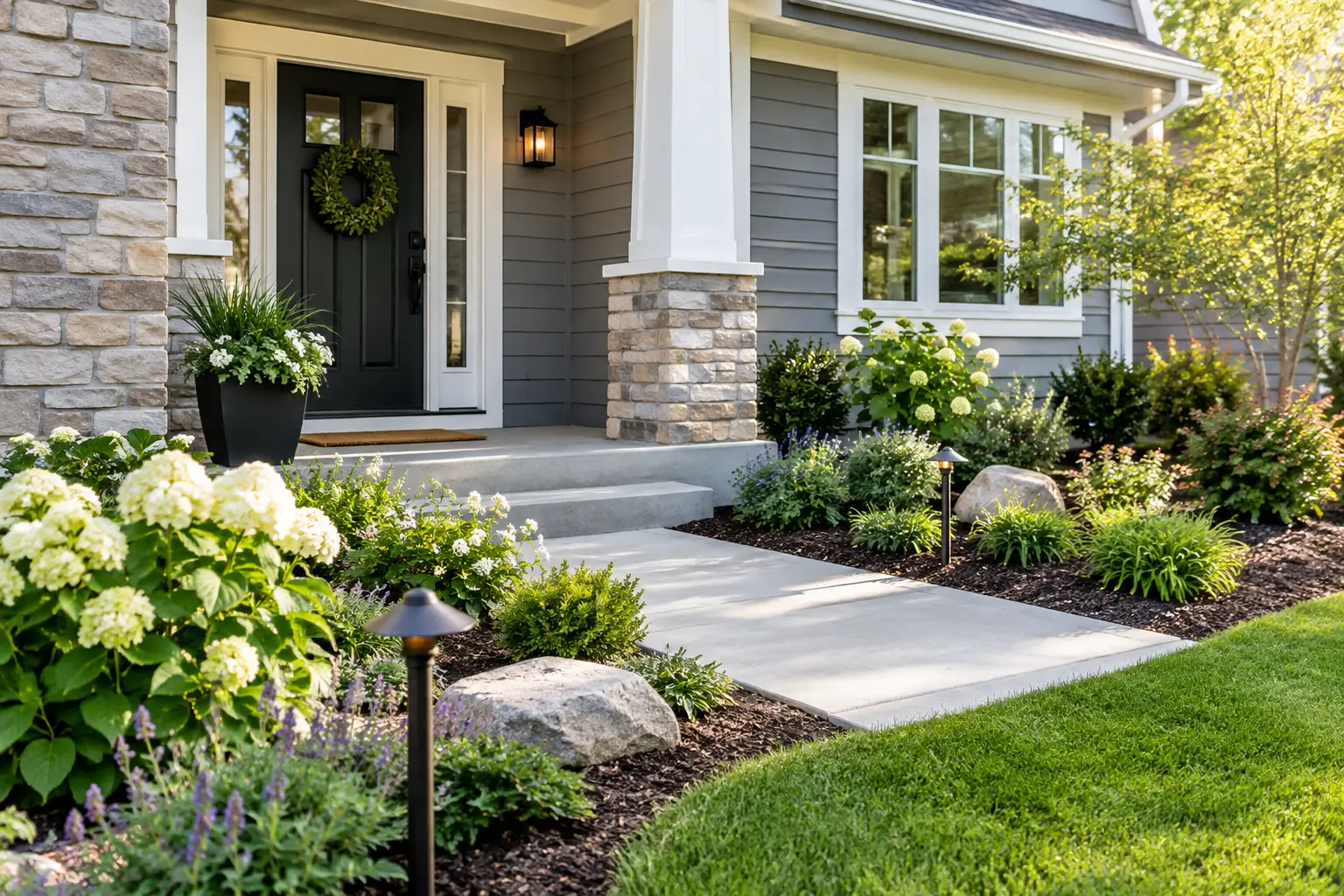
A front entry is experienced in seconds, but its design decisions are read for years. The best front entry landscape upgrades do more than add color near the door. They establish scale, direct arrival, manage Florida rainfall, frame architecture, and make a property feel deliberately resolved from the street to the threshold.
For a high-investment residence, this area deserves the same level of planning as a pool terrace or outdoor kitchen. A dramatic palm placed in the wrong location, a walk that holds water, or lighting that produces glare can undermine an otherwise exceptional home. The strongest upgrades are coordinated as a complete arrival sequence rather than selected as isolated decorative features.
Start With the Arrival Sequence
The front landscape should make the route from the street or driveway unmistakable. This begins with a clear hierarchy: vehicle arrival, guest parking if applicable, the pedestrian walk, the entry court, and the front door. Each element should feel connected without competing for attention.
A properly sized walk is often the most consequential improvement. Narrow paths can make a substantial residence feel under-scaled, while an oversized expanse of paving can appear institutional without planting, changes in material, or carefully defined edges. The appropriate width depends on the architecture, lot dimensions, and whether the entry is intended to accommodate two people walking side by side.
Material selection carries the same importance. Natural stone, porcelain pavers, shellstone, and premium concrete pavers can all be appropriate, but they should support the home’s architectural language and perform well under local conditions. Texture, joint spacing, edge restraint, slip resistance, and transitions at the porch should be addressed in the design phase, not decided during installation.
Create a Focal Point Without Blocking the House
A focal point gives the entry visual identity. It may be a sculptural specimen tree, a layered planting composition, a water feature, an art element, or a distinctive gate and courtyard wall. The objective is not simply to create drama. It is to draw the eye toward the entry while preserving views of the facade and allowing safe, comfortable movement.
In Naples and similar coastal Florida settings, mature palms can provide immediate vertical character, but their placement requires restraint. A palm cluster can frame an entry beautifully; a lone specimen centered directly in front of a window or door can interrupt the composition. Canopy spread, root requirements, maintenance access, and hurricane exposure should inform the location.
For homes with a long drive, the focal point may need to occur in stages. A planted drive approach can introduce the property, while a more refined composition at the entry porch signals the destination. This layered approach feels more intentional than repeating the same plant palette from curb to door.
Invest in Structure Before Decorative Planting
Planting is what many homeowners notice first, but permanent structural elements typically determine whether the landscape will continue to look composed as it matures. Grade changes, retaining conditions, curbs, planters, low walls, steps, and paving geometry should be resolved before finalizing the plant palette.
Low seat walls or raised planters can be particularly effective at expansive entries. They add definition where a flat lawn-to-foundation transition would feel weak, create opportunities for layered planting, and help guide visitors to the front door. Their height, cap material, drainage, and relationship to window sills must be carefully detailed. A wall that is even slightly too high can conceal the base of the house and make the facade feel shorter.
A redesigned driveway can also transform the front landscape. Paver driveways, turf joint systems, and thoughtfully proportioned motor courts offer a more finished presentation than plain concrete while helping organize circulation. These upgrades need a technical review of base preparation, drainage routes, turning radii, and how the material meets garage thresholds and adjacent walks.
The best front entry landscape upgrades also respect maintenance realities. Highly detailed paving patterns, elaborate fountains, and dense planting beds can be appropriate, but only when the owner is prepared for the level of care they require. A refined design is not one that demands constant correction. It is one that retains its form and quality through seasonal growth, rainfall, and regular use.
Make Drainage Invisible but Non-Negotiable
Southwest Florida’s intense rain events expose weak front-entry planning quickly. Water that sheets across a walk, settles near a foundation, or washes mulch onto paving is not merely inconvenient. It affects safety, plant health, finish materials, and long-term property performance.
Drainage should be integrated into the design from the start. That may include subtle grading adjustments, area drains, slot drains, catch basins, swales, permeable paving strategies, or carefully designed discharge routes. The solution depends on existing elevations, roof drainage, soil conditions, municipal requirements, and the relationship between the entry and the street.
The goal is to move water without making drainage hardware the visual feature. Properly located collection points can disappear within paving joints, planting beds, or grade transitions. Conversely, trying to solve water problems after hardscape installation often results in visible patches, awkward drain lines, and compromised finishes.
Irrigation deserves the same coordinated approach. Front entries frequently combine turf, palms, hedges, flowering accents, and container plantings with different water requirements. Zoning irrigation by plant need helps protect the investment while avoiding overspray on walls, windows, walks, and doors. Drip irrigation is often valuable in planting beds and containers, while spray zones should be designed for even turf coverage without waste.
Use Layered Planting to Frame Architecture
A luxury entry should not rely on a row of identical shrubs pushed against the foundation. That approach can flatten the facade and eventually obstruct windows, lighting, and architectural detail. Layered planting provides depth while maintaining order.
A well-developed composition often includes a structural evergreen layer, mid-height texture and color, and lower groundcover or accent planting that softens the edge between hardscape and bed. The exact mix should be based on sun exposure, salt exposure, wind, soil, and the amount of seasonal color the owner wants to maintain.
Evergreen hedges can establish privacy and visual calm, but they need sufficient planting width and a realistic maintenance plan. Tight spaces encourage repeated shearing, which can reduce plant health and produce a rigid appearance. Where space permits, a looser layered screen usually matures more gracefully.
Seasonal color can be used strategically near the front door, in containers, or at key turns in the walk. It should be treated as an accent, not the entire design. Permanent foliage, texture, and form should carry the composition when seasonal material is changed out.
Containers deserve attention because they operate at eye level near the threshold. Their scale should relate to the door, porch columns, and wall planes. One pair of substantial, well-proportioned containers is usually stronger than several small pots competing for notice. Select materials that suit the architecture and can withstand sun, moisture, and routine service.
Add Lighting for Safety, Depth, and Evening Presence
Entry lighting should help guests navigate the property comfortably while revealing the architecture and planting in measured layers. It is not a matter of placing as many fixtures as possible. Excessive brightness can create glare, wash out shadows, and diminish the visual quality of the home after dark.
A balanced scheme typically combines path lighting for orientation, subtle step or wall lighting where needed, uplighting for selected palms or canopy trees, and carefully aimed illumination on architectural focal points. Fixtures should be concealed where practical, specified for the environment, and positioned so the source is not visible from primary viewpoints.
Color temperature matters. Warm lighting generally complements natural stone, textured walls, and planting better than harsh cool-white light. Controls should allow for reliable daily operation, seasonal adjustments, and separate zones when the property has different arrival conditions or entertaining areas.
Coordinate Every Upgrade With the Home’s Architecture
The most expensive front-entry mistake is treating the landscape as an independent layer applied after the home is complete. Entry hardscape, planting, gates, lighting, drainage, and irrigation perform best when they are coordinated with architecture, civil engineering, and construction details.
This is especially relevant when altering elevations, replacing driveways, adding walls, or reworking a large front court. Construction documents and clear specifications reduce interpretation in the field and help preserve the design intent through installation. They also create accountability for details that are easy to overlook, such as drainage slopes, expansion joints, conduit locations, soil preparation, and plant spacing.
Nova LA Designs approaches front landscapes as both a visual and technical discipline, combining concept planning with grading, drainage, irrigation, hardscape, and planting documentation. That level of coordination is valuable when the entry must look effortless while accommodating the demands of a complex property.
The right upgrade is not always the largest one. Sometimes a corrected walk alignment, a stronger pair of containers, layered planting, and disciplined lighting will have more impact than a broad reconstruction. Begin with how the home should be approached, then let every material, plant, and detail reinforce that experience.