
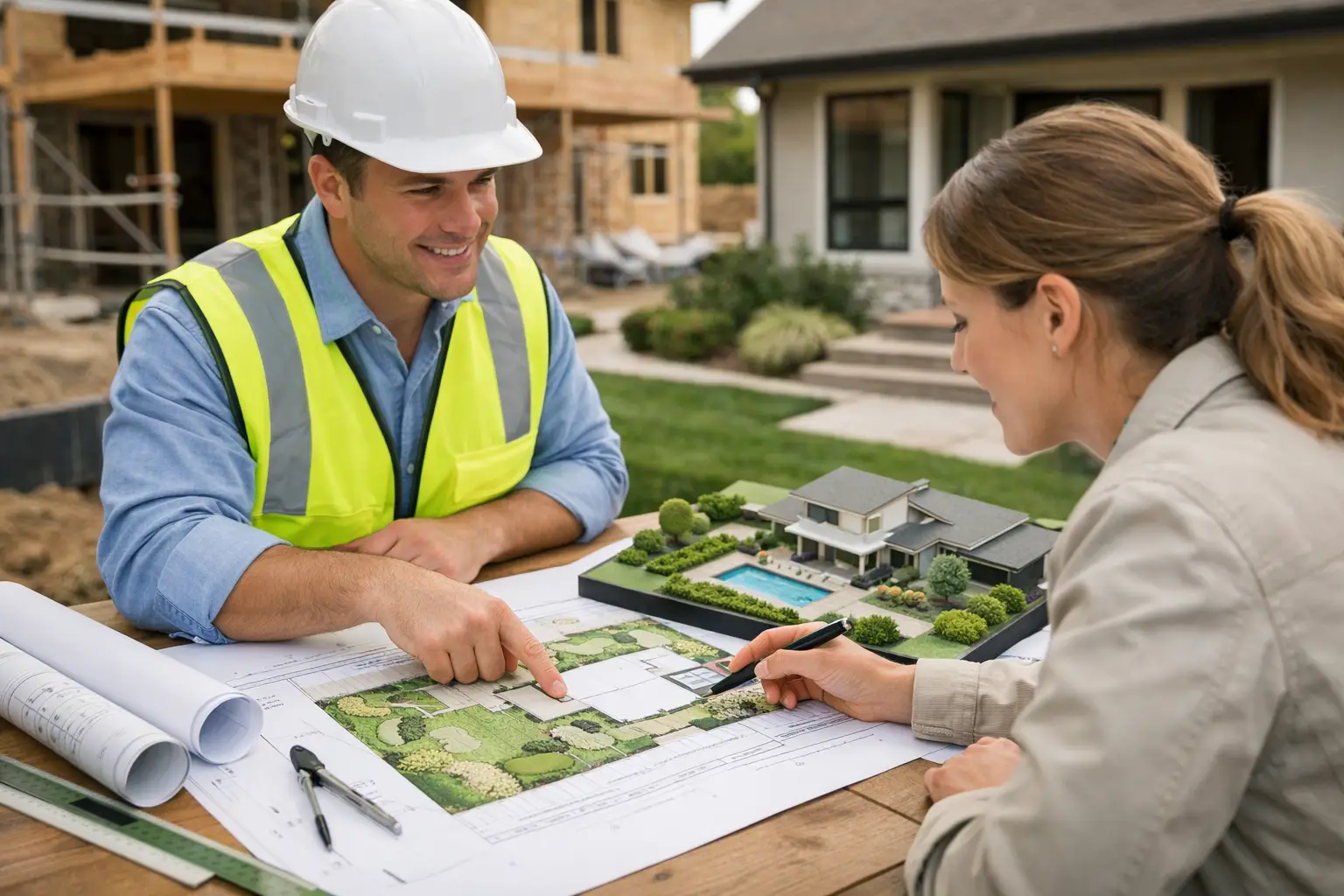
A custom home can be beautifully built and still feel unresolved the moment you step outside. The driveway may meet code, but not the architecture. Drainage may work on paper, yet create standing water near the pool terrace. Planting may be added late, after utilities, lighting, and hardscape decisions have already limited what is possible. That is exactly where a landscape architect for builders adds value – not as a finishing touch, but as a design and planning partner that protects the quality of the entire project.
For builders working on high-end residential properties, the landscape is rarely just lawn and foundation planting. It is grading, drainage, circulation, privacy, outdoor living, irrigation, lighting coordination, material transitions, and construction documentation that must align with the home itself. When those decisions are made early and with technical discipline, projects tend to move more cleanly and present better at turnover.
What a landscape architect for builders actually contributes
Builders often manage a wide range of consultants, trades, approvals, and owner expectations at the same time. The landscape scope can appear straightforward until it begins affecting slab elevations, site walls, stormwater movement, driveway geometry, or permit documentation. At that point, landscape planning is no longer cosmetic. It becomes part of how the site functions.
A landscape architect for builders typically brings order to that complexity. The work may include concept design, site planning, hardscape layout, grading and drainage plans, planting design, irrigation planning, and construction documents. On luxury homes, it can also involve paver driveway design, turf integration, amenity layout, and close review of how the exterior spaces support the architectural intent.
That breadth matters because site decisions are interconnected. A revised pool deck elevation can affect drainage. A wider motor court can change planting room, root zones, and lighting placement. A freestanding wall may alter stormwater flow and require coordination with grading, engineering, and finish materials. Builders benefit when one consultant is thinking across those systems instead of treating them as isolated scopes.
Why early involvement saves time later
The most expensive site problems are often the ones discovered late. A drainage conflict after hardscape installation, an undersized planting area around utilities, or a driveway layout that fights the home’s front approach can all be corrected, but usually at a cost in time, money, or visual quality.
Bringing in a landscape architect early helps reduce those revisions. During planning, the landscape architect can study the lot, topography, setbacks, utility constraints, and architectural program before exterior decisions become fixed. That leads to cleaner coordination between the builder, architect, civil engineer, and specialty trades.
This is especially valuable on larger or more customized properties where outdoor spaces carry significant investment. Covered terraces, kitchens, fire features, water features, and specialty paving all need room, structure, drainage strategy, and a coherent layout. If they are added too late, they can feel attached rather than integrated.
Early coordination also helps with client communication. Homeowners investing in a custom residence expect the exterior to reflect the same level of thought as the interior and architecture. When a builder can present a site plan that addresses circulation, privacy, planting, and functional outdoor use from the outset, the project feels more complete and professionally managed.
The technical side builders cannot afford to treat casually
Good landscape architecture is design-forward, but on active construction projects it also needs to be technically dependable. Builders do not need vague sketches. They need plans that can be priced, coordinated, and built.
Grading and drainage are a clear example. In Florida, where heavy rainfall and flat sites are common, small mistakes in slope can create large problems. Water held against structures, flooding at low points, or runoff moving where it should not are not minor punch-list items. They affect performance and owner satisfaction. A landscape architect who understands grading relationships can help shape exterior spaces that look refined and drain properly.
Construction documents are another major advantage. Builders working at a high level need dimensions, material intent, layout clarity, and details that support field execution. Without that documentation, too much gets interpreted on site. Interpretation leads to inconsistency, and inconsistency is where quality starts to drift.
Irrigation planning also deserves more attention than it often receives. On luxury properties, irrigation cannot be an afterthought routed around whatever remains. It needs to respond to planting zones, hardscape edges, water demand, and long-term landscape health. The same is true for planting design. The right plan considers scale, exposure, maintenance realities, and the architecture’s character rather than simply filling beds.
Better builds come from better coordination
Builders are often judged on items that extend beyond the house itself. Clients remember how they enter the property, how the arrival sequence feels, whether the backyard functions well, and whether the site appears resolved on day one. Those impressions are shaped by coordination.
A well-coordinated landscape plan helps align multiple layers of the build. Exterior materials can transition cleanly from architecture to hardscape. Site walls and paving can reinforce the geometry of the home. Drainage structures can be incorporated with less visual disruption. Planting can soften scale, frame views, and provide privacy without compromising circulation or maintenance access.
There is also a practical benefit for scheduling. When the site design has been developed clearly, trades are less likely to work at cross-purposes. The builder can sequence installation with more confidence because the intent has been established before field conditions force improvisation.
That does not mean every project becomes simple. There are always trade-offs. Some lots require choosing between expansive paving and adequate planting volume. Some budgets support highly customized exterior detailing, while others call for tighter prioritization. A seasoned landscape architect can help builders make those decisions without losing the overall design integrity of the project.
What builders should look for in a landscape architect
Not every project needs the same level of landscape involvement. A production builder may need repeatable standards and efficient documentation. A custom luxury builder usually needs deeper collaboration, more bespoke detailing, and stronger oversight through installation. The right fit depends on the scale, expectations, and complexity of the work.
For high-end residential projects, builders should look for a landscape architect with three qualities: design judgment, technical fluency, and construction awareness. Design judgment matters because the exterior must suit the architecture and property rather than rely on formula. Technical fluency matters because grading, drainage, irrigation, and documentation affect buildability. Construction awareness matters because elegant plans are only useful if they can be executed properly in the field.
It also helps to work with a consultant who stays engaged beyond the drawing set. Site review, clarification during construction, and hands-on attention to design intent can make a noticeable difference in the finished result. That level of accountability is often what separates a competent exterior plan from a landscape that truly supports the value of the home.
Firms such as Nova LA Designs are often brought into builder teams for exactly that reason – not simply to create attractive outdoor spaces, but to provide disciplined planning and oversight that carry through implementation.
When the landscape becomes part of the builder’s reputation
On premium residential work, the house and the site are judged together. If the landscape feels unresolved, the project feels unresolved. If drainage performs poorly, if the front approach lacks presence, or if the backyard layout feels disconnected from the home, those issues tend to reflect on the builder whether or not they originated there.
That is why the right landscape architect for builders is not just a consultant filling a scope line. The role is closer to a project partner who helps protect design quality, reduce preventable site issues, and create a finished property that reads as intentional from curb to courtyard.
For builders who want fewer last-minute fixes and a stronger final presentation, that partnership usually pays for itself long before the first tree is planted. The best time to shape the landscape is when the rest of the project is still being shaped with it.