
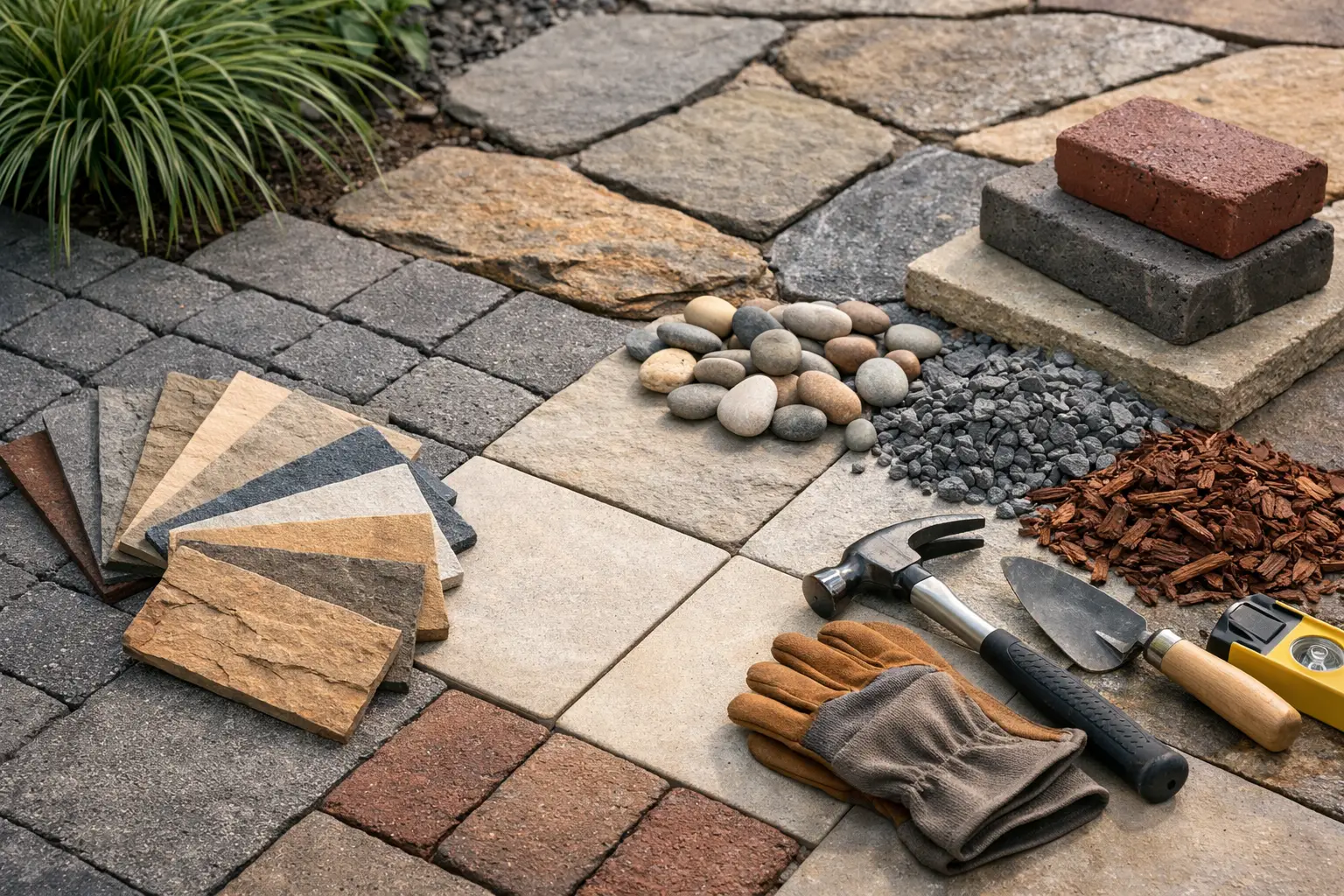
A patio can look exceptional on a plan and still disappoint once it meets sun glare, standing water, salt air, and daily foot traffic. That is why a hardscape material selection guide matters early, not after the layout is approved. For high-investment residential projects, the right material is never just a finish choice. It affects performance, maintenance, drainage behavior, heat retention, construction detailing, and the overall quality of the landscape.
In luxury outdoor environments, material selection is where design intent either sharpens or starts to erode. A beautifully proportioned terrace loses its impact if the surface stains too easily, becomes slippery at the pool edge, or fights with the architecture of the home. The best decisions come from weighing aesthetics and engineering at the same time.
What a hardscape material selection guide should address
A useful hardscape material selection guide does more than compare appearances. It should help answer five practical questions. How will the space be used? What weather and site conditions will the material face? What level of maintenance is acceptable? How precise does the detailing need to be? And what visual character should the finished landscape project convey?
Those questions sound straightforward, but they often reveal competing priorities. A homeowner may prefer the clean, monolithic look of large-format concrete slabs, while the site may demand a more forgiving modular paving system because of drainage, tree roots, or long-term service access. A natural stone may deliver the right texture and permanence, yet prove too porous or too variable for a tight visual palette. Good selection work lives in those trade-offs.
Start with function before appearance
The first filter is use. A front walk, motor court, pool deck, garden path, and retaining wall should not be evaluated by the same standards.
Driveways and arrival courts require structural integrity first. They carry repeated vehicle loads, turning movements, and occasional service traffic. Materials that perform well on a pedestrian terrace may fail prematurely in a vehicular application if the base, edge restraint, thickness, or jointing system is not appropriate. For that reason, many projects benefit from pavers, stone set on a properly engineered base, or poured systems designed specifically for load-bearing conditions.
Pool decks raise a different set of concerns. Surface temperature, slip resistance, bare-foot comfort, and resistance to pool chemicals matter more than compressive strength alone. Some dark stones become uncomfortably hot in full sun. Some smooth finishes look refined but become unsafe when wet. In these areas, tactile performance should carry equal weight with visual appeal.
Patios and outdoor living spaces offer more flexibility, but they still need discipline. Dining terraces, covered lanais, outdoor kitchens, and fire features often bring grease, furniture movement, and concentrated use. Materials with heavy clefting, excessive surface variation, or difficult cleaning requirements may look compelling in a sample and become frustrating in daily life.
Climate and site conditions matter more than most samples suggest
Material boards are helpful, but they rarely tell the whole story. A small sample viewed indoors cannot show how a surface behaves in harsh sun, prolonged moisture, or the humidity and salt exposure common in coastal Florida conditions.
Porosity is one of the most overlooked factors. Highly absorbent materials can darken unevenly, hold organic staining, or support mildew growth in shaded or damp areas. That does not automatically rule them out. It means the design team needs to evaluate sealing strategy, maintenance expectations, and placement carefully.
Drainage is equally important. Hardscape does not exist as a flat decorative layer. It is part of a larger grading system that directs water away from structures, manages runoff, and protects the long-term stability of the installation. Some materials and jointing methods are more forgiving in areas where subtle settlement may occur. Others demand tighter tolerances and more controlled substrate conditions.
Site context can also change the right answer. A contemporary waterfront residence may call for crisp lines, low visual noise, and materials that read cleanly across broad expanses. A Mediterranean or transitional home may benefit from warmer tones and more texture. The architecture should lead, but the site should still have a voice.
Comparing the most common hardscape materials
Concrete pavers remain a strong choice for many residential applications because they balance durability, flexibility, and design range. They are especially useful where access to underground utilities, long-term repairability, or subtle movement tolerance is important. Quality varies widely, however, and lower-grade products can fade unevenly or look dated quickly. For high-end projects, scale, edge profile, finish consistency, and color restraint matter.
Natural stone offers depth and authenticity that manufactured materials often struggle to match. Travertine, limestone, marble, shell stone, and granite each bring a distinct character. The challenge is that natural stone is not one category from a performance standpoint. Some stones etch, some absorb readily, some remain cooler underfoot, and some require more selective installation practices because of thickness variation or veining. The appeal is real, but so is the need for careful specification.
Porcelain has become increasingly relevant in refined outdoor design because it provides a controlled look, excellent stain resistance, and strong consistency from piece to piece. It works especially well when a project calls for a modern visual language or continuity between indoor and outdoor surfaces. The trade-off is that porcelain can be less forgiving during installation. It requires a disciplined substrate, accurate detailing, and crews who understand the product.
Poured concrete can be elegant when proportion, finish, scoring, and color are handled well. It can also look harsh or develop visible cracking if used without restraint and proper detailing. In the right setting, it creates a sophisticated plane that supports architecture rather than competing with it. But it is rarely a shortcut. The cleaner the look, the more exact the execution needs to be.
Clay brick brings a timeless quality and can be particularly effective in formal or historically influenced settings. It wears gracefully and offers a scale that feels human and established. Its limitations usually relate to style fit and color range rather than durability. In some contemporary landscapes, brick introduces more visual movement than the architecture wants.
The finish is as important as the material
Clients often focus on material type and color first, but finish drives much of the lived experience. Honed, tumbled, brushed, flamed, sandblasted, and textured surfaces can completely change how a material performs and how formal it feels.
This is especially true around water. A stone that looks ideal in a honed interior finish may need a more textured exterior treatment to improve traction. A paver selected for its color may become visually too busy once a heavy surface texture catches shadow across a broad terrace. Subtle decisions at the finish level often separate a polished result from a merely expensive one.
Joint treatment matters too. Narrow joints create a tighter architectural read, while wider joints can feel more relaxed or traditional. Permeable systems, polymeric sands, mortar-set installations, and pedestal applications each influence drainage, movement, and maintenance differently. There is no universal best option. There is only the option that aligns with the project requirements.
Matching materials to the level of the home
On custom residential work, hardscape should feel integrated with the architecture, not selected from a separate menu. The paving, coping, walls, steps, and driveway should share a logic of scale, color temperature, and finish.
One common mistake is over-mixing. Too many materials can fragment the site and weaken the clarity of the design. Another is over-matching, where every surface uses the same material regardless of function. The most successful projects usually work from a restrained palette with purposeful variation. A driveway may need a more durable or textured surface, while the pool terrace shifts to a cooler, more barefoot-friendly material in a coordinated tone.
This is where design documentation becomes critical. Material intent should not live only in inspiration images. It needs to be translated into precise plans, details, transitions, elevations, drainage relationships, and installation notes. That level of clarity protects the design during pricing, construction, and field adjustments.
How to make the final choice with confidence
Samples should be reviewed in natural light, ideally at the site, and compared against the home exterior, roof tones, and adjacent finishes. Large samples are far more useful than small chips because they reveal movement, veining, texture, and color variation more honestly.
It is also wise to think past the completion date. Ask how the material will look in two years, not two weeks. Will furniture leave marks? Will organic debris stain it? Will the selected tone show every bit of sand and leaf litter? A material can be technically suitable and still wrong for a client who wants a low-visibility maintenance profile.
At Nova LA Designs, that evaluation is part of the design discipline, not an afterthought. Material selection works best when it is considered alongside grading, drainage, architectural style, and construction method from the beginning.
The right hardscape does not call attention to the decision-making behind it. It simply feels resolved, performs reliably, and gives the landscape the level of permanence a well-designed property deserves.