
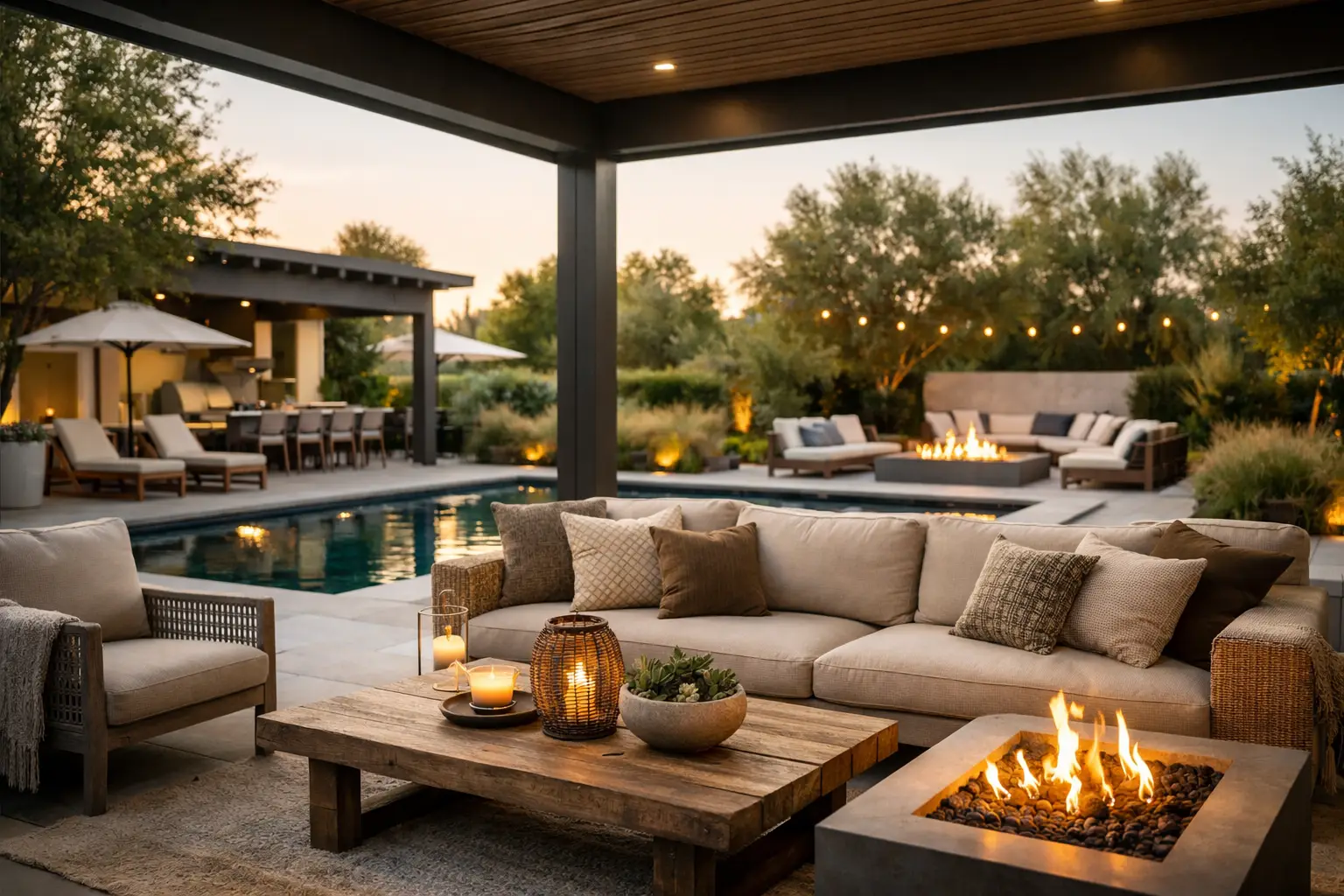
A luxury outdoor space rarely fails because of style. It fails when the layout ignores how people actually live, when materials cannot handle the climate, or when drainage and construction details are treated as secondary. That is why the most relevant outdoor living design trends are not just visual. They reflect a higher standard of planning, performance, and long-term use.
For homeowners, builders, and design professionals working on significant residential projects, the conversation has moved beyond adding a patio and a few decorative features. Outdoor environments are being designed as fully integrated extensions of the home, with the same level of architectural discipline, material consideration, and day-to-day functionality expected indoors. The trend is refinement, not excess.
Outdoor Living Design Trends Are Getting More Architectural
The clearest shift is toward outdoor spaces that feel designed with the house, not appended after construction. This means stronger alignment between architecture, hardscape geometry, finish selections, and site planning. Outdoor kitchens, covered lounges, fire features, pools, and garden rooms are no longer being treated as isolated amenities. They are being composed as connected elements within a larger framework.
That matters because visual cohesion affects more than appearance. It influences circulation, furnishing scale, view lines from inside the home, and how each outdoor zone supports another. A well-composed plan makes the property feel larger and more intentional. A fragmented one often feels expensive but unresolved.
In high-end work, this architectural approach also tends to produce better construction outcomes. When paving patterns, wall alignments, steps, drainage slopes, and lighting routes are resolved early, the finished project is cleaner and more durable. The trend is less about decoration and more about disciplined integration.
Comfort Is Driving Layout Decisions
Many outdoor living design trends can be traced back to a simple demand: people want spaces they will use regularly, not seasonally. That has changed the way designers think about proportion, shade, privacy, and adjacency.
A lounge area placed for sunset views may sound appealing, but if it has no meaningful protection from heat or wind, it will be underused. An outdoor dining terrace might look generous on plan, but if circulation around the table is tight or the grill placement creates congestion, it will not perform well. The strongest projects begin with behavior. Where do people gather? How many are typically present? Is the space for quiet daily use, large-scale entertaining, or both?
This is one reason covered structures, layered seating arrangements, and flexible-use zones remain prominent. Homeowners want options. A shaded morning seating area, a poolside social space, and a more intimate evening setting can coexist, provided the plan is balanced and not overbuilt. More features do not automatically create more value. In many cases, restraint creates a more livable result.
Material Selection Is Becoming More Strategic
Material palettes are becoming quieter, but the thinking behind them is more rigorous. There is a clear preference for finishes that feel timeless, textural, and compatible with the residence rather than overly stylized or trend-driven. Large-format pavers, natural stone, porcelain surfaces, refined concrete detailing, and warm wood-look accents continue to appear in premium projects because they support a clean visual language.
The real trend, however, is performance-minded specification. Slip resistance, heat retention, salt-air exposure, maintenance requirements, and installation method all matter. A material that photographs well may still be a poor choice for a pool deck or exposed terrace. Likewise, a surface that performs beautifully in one climate may become a maintenance burden in another.
Clients are also paying closer attention to transitions. The move from interior flooring to exterior paving, from driveway to entry court, or from pool coping to terrace now receives more design scrutiny. These moments shape how polished a project feels. They also reveal whether the design team understood the property as a whole.
The Best Landscapes Hide Their Technical Complexity
One of the most meaningful shifts in the market is that technical planning is no longer treated as a background task. It is part of what defines quality. Drainage, grading, irrigation, lighting infrastructure, and construction detailing are central to whether an outdoor space ages well.
This is especially true in Florida, where heavy rain, high water tables, intense sun, and coastal conditions place real demands on exterior environments. A clean hardscape composition can quickly lose value if runoff is mismanaged, planting zones are poorly irrigated, or finished elevations create water problems near the home. The most sophisticated outdoor spaces often appear effortless precisely because so much technical coordination was handled correctly in advance.
Clients investing in custom residential work increasingly understand that hidden systems protect visible design. That has elevated expectations around documentation, coordination with engineers and builders, and site-specific planning. It is a positive trend, because beautiful work should also be buildable and defensible.
Planting Design Is Shifting Toward Structure and Purpose
Planting plans are becoming more edited and more intentional. Instead of relying on sheer variety, many luxury landscapes now use a tighter plant palette with stronger massing, clearer hierarchy, and better year-round structure. This creates a calmer visual effect and typically improves maintainability.
There is also more interest in plants doing specific jobs. Screening, framing views, softening architecture, managing scale, and guiding movement are all part of the planting strategy. That does not mean colorful or expressive planting is disappearing. It means plant selection is being asked to support a broader design logic.
For some properties, a lush layered look is entirely appropriate. For others, restraint and sculptural form are the better answer. It depends on the architecture, lot conditions, and level of maintenance the owner is prepared to support. A planting design should match the property and the client, not just current taste.
Lighting Is More Subtle and More Integrated
Outdoor lighting has moved away from the idea of simply making a yard visible at night. The best current work uses lighting to shape atmosphere, reinforce circulation, and highlight architecture and landscape elements with precision.
This has led to more concealed fixture locations, more disciplined beam placement, and fewer overly bright effects. Instead of flooding the property with light, designers are using layered illumination to create depth and clarity. Entry sequences, steps, specimen trees, water features, and entertaining areas each require a different approach.
The trade-off is that subtle lighting demands better planning. Fixture placement, wiring routes, voltage considerations, and maintenance access need to be resolved before construction is complete. When done well, the result feels effortless. When done poorly, even expensive fixtures can look harsh or arbitrary.
Wellness and Privacy Are Showing Up in Practical Ways
Wellness is often discussed in broad lifestyle terms, but in outdoor design it usually translates into tangible planning decisions. Clients want places to decompress, exercise, entertain comfortably, and spend more time outside without feeling exposed.
That is why privacy screening, quiet seating zones, shade strategies, outdoor showers, cold plunge integration, and low-glare lighting continue to gain attention. These features do not have to feel trendy to be effective. In fact, the strongest projects treat wellness as a design performance issue rather than a marketing concept.
Privacy, especially on luxury residential properties, deserves careful handling. A dense green wall may create seclusion but can also block air movement or require intensive upkeep. Masonry walls offer stronger enclosure but may feel heavy if not balanced by planting and proportion. The right answer depends on the site and the architecture.
Technology Is Being Used More Selectively
Clients still want convenience, but the trend is moving toward technology that supports the space without dominating it. Automated irrigation, lighting control, audio integration, and pool or spa management can absolutely improve day-to-day use. The key is specifying systems that are reliable, serviceable, and appropriate for the property.
Not every project benefits from adding more controls or features. In some cases, simplicity is the more durable luxury. Technology should reduce friction, not introduce complexity that becomes frustrating over time.
What Will Actually Last
Some trends fade because they were never rooted in function. Others endure because they answer real needs with design discipline. The outdoor spaces that hold their value are the ones that respect how a property drains, how a family lives, how materials weather, and how architecture and landscape should speak to each other.
For that reason, the most important trend is not any single material, feature, or style. It is the expectation that outdoor environments should be tailored, technically sound, and fully resolved before construction begins. Firms such as Nova LA Designs have built their reputation on exactly that standard – creative vision supported by precise planning and direct project oversight.
If you are evaluating ideas for a new outdoor environment, look past what is fashionable for the moment. The better question is whether the design will still feel composed, comfortable, and well-built years after installation.