
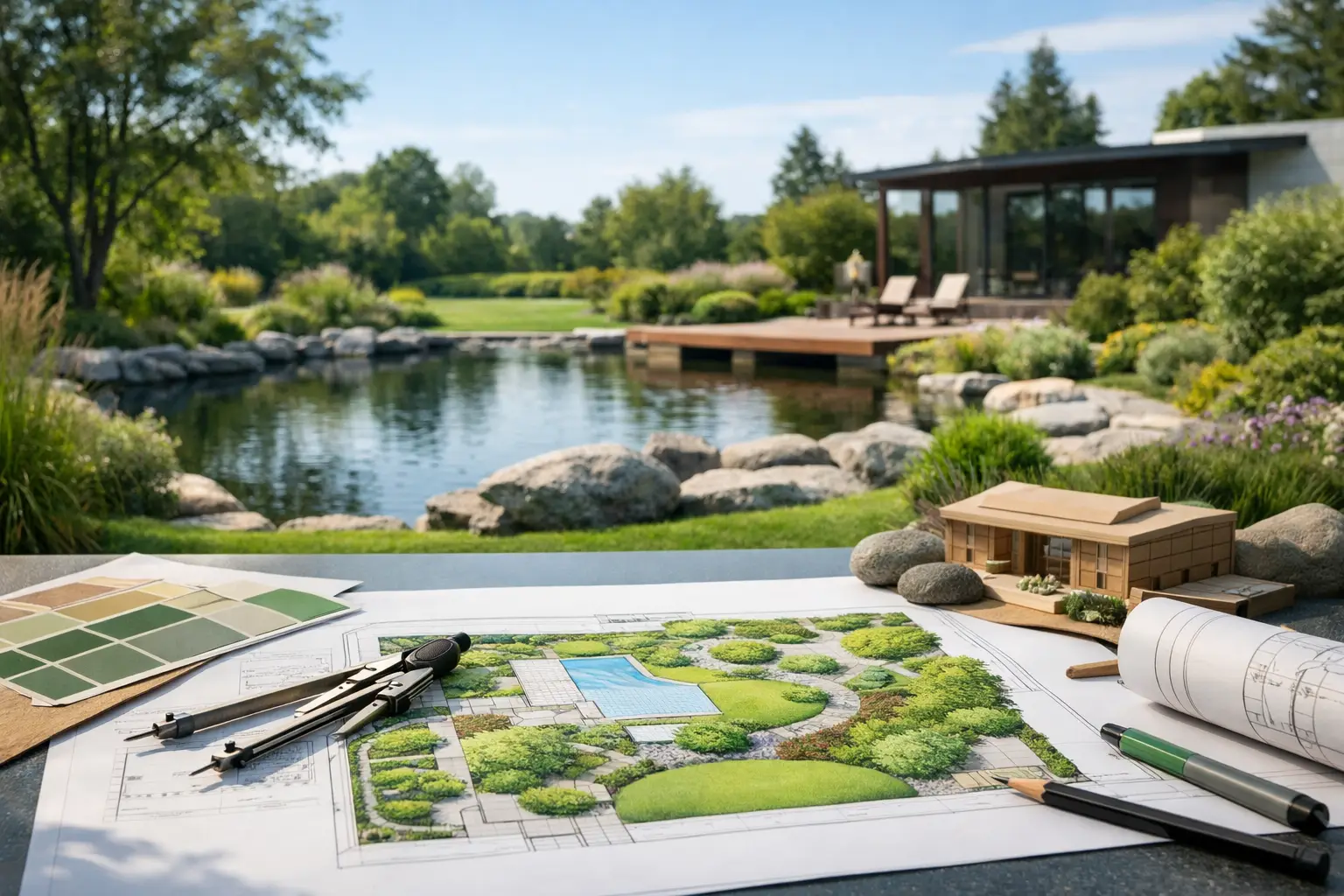
A house can be impeccably designed and still feel unfinished the moment you step outside. The reason is simple: architecture does not end at the exterior wall. If you are asking what is landscape design in architecture, the answer starts there. It is the discipline that shapes the land around a structure so the site performs well, looks intentional, and supports the way people actually live.
For high-value residential properties especially, landscape design in architecture is not just about selecting plants or adding a patio. It is the planning of outdoor space as part of the total built environment. That includes circulation, grading, drainage, hardscape, planting, lighting coordination, privacy, views, and the relationship between indoor and outdoor rooms. When it is done correctly, the landscape feels inseparable from the home rather than added after the fact.
What Is Landscape Design in Architecture?
In architectural terms, landscape design is the process of organizing exterior land and features to complement a building both visually and functionally. It bridges architecture, site engineering, horticulture, and construction planning.
A well-designed landscape addresses far more than appearance. It considers how people arrive at the property, where water moves during a storm, how elevations affect usability, where shade is needed, which materials belong with the architecture, and how planting should frame rather than compete with the structure. On a custom residence, that might mean aligning a motor court with the architectural axis, shaping grading so water drains away cleanly, integrating a pool terrace with the floor elevation, and using planting masses to create privacy without closing off key views.
That is why landscape design in architecture should not be confused with simple decoration. Decoration can be changed seasonally. Landscape design establishes the physical and visual framework of the site.
Why It Matters More Than Many Owners Expect
The landscape has a direct effect on how architecture is experienced. It influences first impression, comfort, circulation, maintenance demands, and long-term property value. A refined home placed on a poorly organized site can feel awkward, exposed, or difficult to use. A thoughtfully planned site makes the architecture read more clearly and function more effectively.
This becomes even more important on complex properties. Sloped lots, waterfront homes, estate-sized parcels, and custom builds with multiple outdoor amenities all require careful coordination. Without that coordination, small missteps become expensive ones. Drainage problems can damage hardscape and planting. Poor grading can make lawns unusable. Misplaced trees can block views or interfere with structures. Materials can look disconnected if they are not selected with the architecture in mind.
For clients investing significantly in a residence or development, landscape design protects the larger investment. It helps ensure that exterior construction is not handled as a series of disconnected decisions.
The Core Components of Landscape Design in Architecture
Site planning and spatial organization
Every successful landscape starts with a clear site plan. This determines how the property is organized and how exterior areas relate to the building. Entry drives, guest arrival, service access, garden rooms, pool areas, lawns, terraces, and transitional spaces all need a logical arrangement.
Good site planning also establishes proportion. On a larger residence, for example, the landscape should support the scale of the architecture without overwhelming it. On a more compact lot, the design may need to create privacy and usable outdoor living space with tighter constraints. The right solution depends on the property, the architecture, and the owner’s priorities.
Grading and drainage
This is one of the least glamorous parts of landscape design and one of the most critical. Land must be shaped so water moves away from structures and usable areas remain functional. In Florida, where heavy rain events are common, grading and drainage planning are not optional technical exercises. They are essential to performance.
A landscape architect studies existing elevations, site conditions, runoff patterns, and finish floor relationships before design decisions are finalized. This is where design skill and technical discipline meet. Beautiful plans that ignore drainage rarely stay beautiful for long.
Hardscape design
Hardscape includes the built, non-plant elements of the landscape such as terraces, walkways, driveways, retaining walls, steps, courtyards, pool decks, and site walls. In architectural landscape design, hardscape is not treated as filler between planted areas. It is a major part of the composition.
Material selection matters here. Stone, pavers, shell, concrete finishes, and edging details should feel consistent with the architecture and appropriate for the site. The dimensions, alignments, and transitions matter just as much as the materials themselves. A well-designed terrace should feel like an extension of the home, not an isolated slab placed behind it.
Planting design
Planting gives softness, shade, depth, and seasonal interest, but in an architectural setting it also does more strategic work. Plants frame views, direct movement, reduce scale, create enclosure, screen undesirable sightlines, and support the character of the property.
The best planting plans balance aesthetics with climate, maintenance expectations, growth habits, and irrigation needs. A mature landscape should improve with time. That requires discipline at the design stage. Overplanting for instant effect can create costly problems later. Underplanting can leave a property looking sparse and unresolved. The right approach usually falls between those extremes.
Irrigation and technical coordination
Landscape design in architecture often includes systems that are invisible when done right. Irrigation is one example. Planting design and irrigation design should support each other from the beginning, especially where water management, sustainability, and long-term plant health are priorities.
Technical coordination also extends to lighting, utilities, structural elements, pool design, drainage infrastructure, and construction detailing. On custom residential projects, these systems often intersect. That is why the landscape cannot be an afterthought once engineering and building work are underway.
How Landscape Design Differs From Landscaping
This distinction matters. Landscaping often refers to installation or maintenance work such as planting, sod, mulching, trimming, or replacing site features. Landscape design in architecture happens earlier and at a much higher planning level.
The designer is not simply choosing attractive materials and plant species. The work involves analyzing the site, creating a concept, resolving technical constraints, producing plans, and coordinating the exterior environment with the architecture and construction process. In many cases, detailed construction documents are required so contractors can build the design accurately.
There is overlap, of course. A strong landscape design eventually becomes a landscape installation. But design is the strategy. Installation is the execution.
When a Landscape Architect Should Be Involved
The ideal time is early, before major site and exterior decisions are locked in. If the landscape professional enters the process after the home, driveway, pool, drainage infrastructure, and utility routes are already determined, options narrow quickly.
Early involvement allows the landscape architect to influence how the house sits on the property, how elevations are managed, how outdoor living areas connect to the interior, and how circulation works from the street to the front door to the rear garden. It also helps avoid redesign later.
For luxury homes and architect-led projects, this coordination is especially valuable. The more customized the architecture, the less room there is for generic exterior planning.
What Good Landscape Design Looks Like in Practice
A strong landscape design usually does not call attention to itself through excess. It feels calm, resolved, and appropriate to the architecture. Arrival is clear. Outdoor spaces are usable. Drainage problems are absent. Views are framed. Privacy feels intentional. Materials belong together. Planting has structure.
That does not mean every property should look formal or restrained. Some sites call for a more relaxed, tropical character. Others benefit from strong geometry and architectural planting. The right answer depends on the home, the setting, and the owner. Good design is not about imposing a signature style onto every project. It is about creating the right solution for that specific place.
This is where experience matters. A designer with construction knowledge and technical fluency can make better decisions about what will actually hold up over time. Drawings need to be buildable, not just attractive on paper. For that reason, firms such as Nova LA Designs often combine concept development with detailed site planning, grading, drainage, planting, and construction documentation so the final result stays aligned with the original design intent.
What Homeowners and Project Teams Should Ask
If you are evaluating landscape design as part of an architectural project, ask how the site will function, not just how it will look. Ask how drainage is being addressed, how material transitions will be handled, how planting will mature, and how the outdoor spaces support daily use. Ask whether the design has been coordinated with the architect, engineer, and builder.
Those questions tend to reveal the difference between surface-level planning and true architectural landscape design. On a significant property, that difference is visible from the street and measurable over time.
The most successful landscapes do not compete with the architecture or sit quietly behind it. They complete it, giving the building a setting that performs as well as it presents.