
A patio that looks impressive in a rendering but feels awkward in daily use is not a successful design. When clients ask how to design patio spaces well, the right answer starts with function, scale, and construction discipline – not with pavers or furniture selections.
A well-designed patio should fit the architecture, support the way the property is actually used, and perform in weather over time. That requires more than arranging a table and choosing a surface finish. It means understanding circulation, drainage, sun exposure, views, grade changes, and how each hardscape decision affects the rest of the landscape.
How to design patio layouts with purpose
The first design decision is not material. It is use. A patio for large-scale entertaining needs a different footprint than one intended for quiet morning coffee or a pair of chaise lounges by the pool. Too often, patios are undersized because they are planned around empty square footage rather than furnished square footage.
Start by defining the primary functions. Dining, lounging, grilling, and transition space each require their own zone. In higher-end residential projects, the best results often come from separating these uses clearly while keeping them visually connected. A dining terrace adjacent to the home may need direct access to the kitchen, while a seating area may be better oriented toward a garden axis, water feature, or sunset exposure.
This is where scale matters. A patio can be beautifully detailed and still fail if chairs cannot slide back comfortably or if guests must move through a conversation area to reach the pool. Good design allows movement without conflict. It gives furniture room to breathe and preserves intentional sightlines from both inside and outside the home.
Shape matters as well. A large rectangle is simple, but not always correct. Sometimes the architecture calls for a strong geometric extension of the house. In other cases, a series of connected planes creates a more refined result by breaking down scale and responding to property lines, views, or existing trees. The right layout should feel inevitable, as if it belongs to the house rather than being placed beside it.
Begin with the house, not the hardscape catalog
A patio should read as part of the overall composition. That means taking cues from the home’s proportions, floor elevations, door locations, and architectural language before selecting any finish. Contemporary homes usually benefit from cleaner alignments and restrained material transitions. More traditional residences may support a more articulated edge treatment, varied paving rhythm, or stronger relationship to garden rooms.
The connection between interior and exterior is especially important. If the patio sits just outside a major living area, the paving layout, elevation, and axis should support that relationship. Misaligned door centers, awkward step-downs, and abrupt material changes can diminish even an expensive installation.
In custom residential work, one of the most common mistakes is designing the patio as an isolated feature. In reality, it is tied to grading, planting, irrigation, drainage patterns, lighting, and often pool design. Treating it as a standalone element usually leads to compromises later.
How to design patio surfaces that suit climate and use
Material selection should balance aesthetics, durability, maintenance, and slip resistance. There is no universal best surface. The right choice depends on sun exposure, the surrounding architecture, expected use, and the level of upkeep the owner is willing to accept.
Natural stone offers depth, variation, and a more custom character, but performance varies widely by stone type and finish. Some surfaces remain cooler underfoot, while others may weather or stain more noticeably. Porcelain can provide a clean, controlled appearance with strong consistency and good durability, though it may feel less nuanced than natural materials in certain settings. High-quality concrete pavers can be effective when the design calls for precision and a more disciplined cost structure, but the detailing and installation quality matter greatly.
In Florida and similar climates, heat gain and moisture are practical concerns. A dark surface may look sophisticated in photographs and become uncomfortable in full sun. A textured finish may improve traction around water but collect more debris. These trade-offs should be discussed early, before aesthetic preference hardens into a specification.
Jointing also deserves attention. The size and pattern of paving joints influence both appearance and performance. Tight, crisp lines can support a modern design language, while larger joints may soften the composition or allow for planted breaks. What matters is that the paving pattern feels intentional and is coordinated with drainage and installation tolerances.
Drainage is part of patio design, not a correction later
A patio that holds water is a design failure, no matter how beautiful the stone may be. Proper slope, subsurface preparation, and water management should be resolved from the beginning. This is particularly important on custom properties where finish floors, pool decks, planters, driveways, and lawn areas all influence how water moves.
Many outdoor problems begin with the assumption that flat looks better. In practice, a patio must be graded carefully enough to drain while still appearing level to the eye. The slope has to direct runoff away from structures, avoid ponding at furniture zones, and work with adjacent site conditions.
Drainage solutions vary by project. Some patios can shed water naturally to planting beds or open lawn areas. Others require slot drains, catch basins, or more engineered systems tied into overall site infrastructure. The correct approach depends on elevation, soil conditions, lot constraints, and how much impermeable surface is being added.
This is also why construction documentation matters. A patio is not just a finish plan. It should be supported by grading intent, edge details, drainage coordination, and realistic tolerances for installation.
Shade, comfort, and orientation deserve equal weight
Patio design is often judged visually, but comfort determines whether the space is used. Sun orientation, wind exposure, and the timing of shade have a direct impact on how successful the space will be.
A west-facing entertaining terrace may be ideal in winter and punishing in late summer. A seating area placed for the best view may be too exposed without overhead structure or nearby canopy trees. These conditions are not reasons to avoid the location, but they do require a response.
Permanent shade structures, pergolas, covered loggias, and strategically placed planting can all improve comfort. Each option comes with trade-offs. A solid roof gives reliable protection and supports lighting and fans, but changes the openness of the space. A pergola preserves air and light while offering less relief during peak heat. Trees add softness and long-term value, but require time, root space, and species-appropriate placement.
For many high-end projects, the strongest patios are designed around seasonal use patterns. They acknowledge where morning light is welcome, where afternoon heat needs mitigation, and how outdoor living shifts throughout the year.
Furnish the patio before it is built
One of the most effective ways to avoid design mistakes is to place furniture on the plan before finalizing the patio footprint. This sounds basic, but it is frequently overlooked. When the furniture layout is treated as a later decorating exercise, patios tend to feel cramped or unresolved.
Dining tables, lounge seating, side tables, chaises, outdoor kitchens, and circulation clearances should all be tested during design. This reveals whether the patio is truly large enough and whether the zones are arranged in a way that makes sense. It also helps align lighting, planters, and steps with actual use rather than abstract geometry.
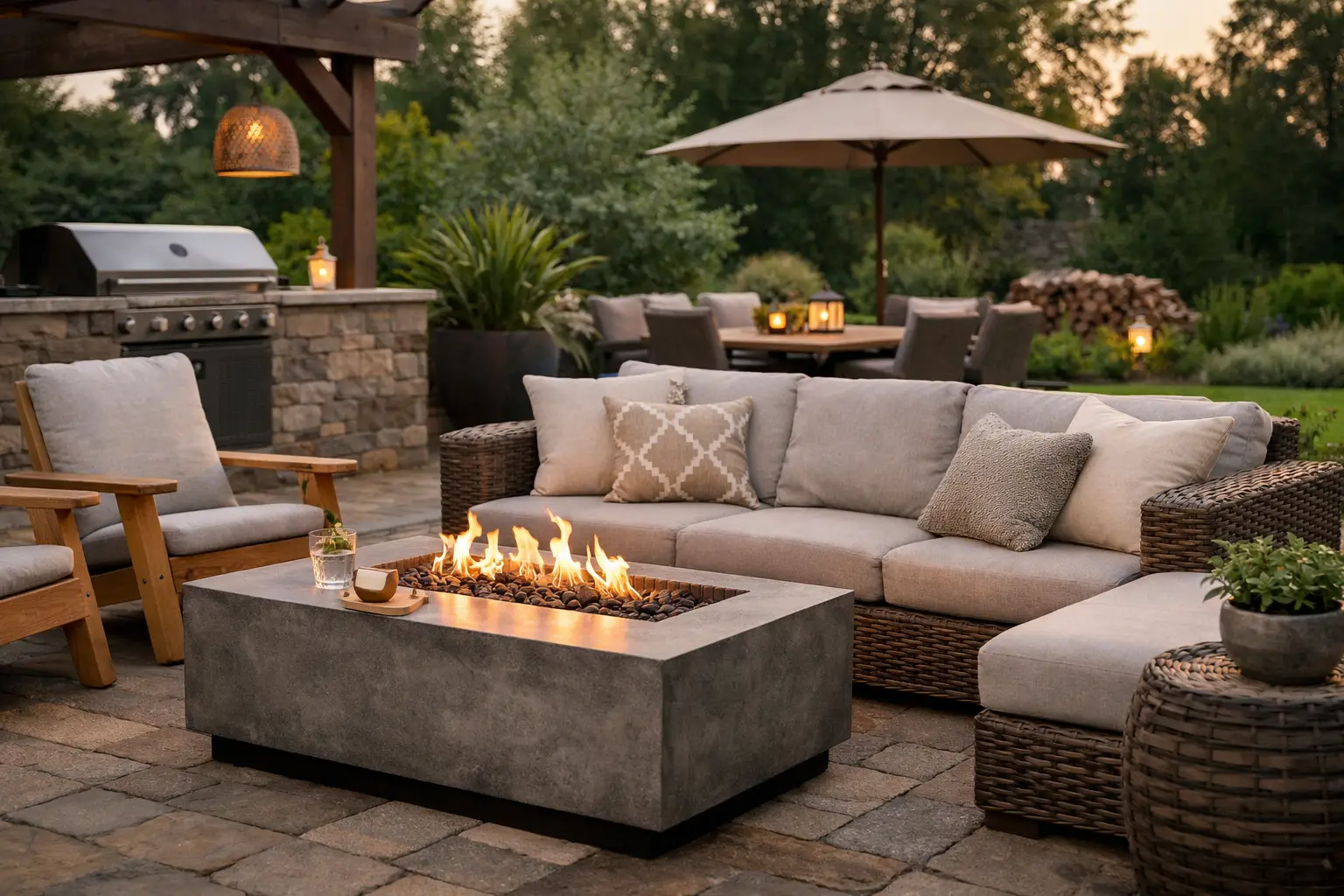
Furniture planning is particularly important where multiple functions meet. A grill station near a dining space may be efficient, but not if it pushes heat and traffic into the seating area. A fire feature may create a strong focal point, but not if it interrupts the primary view or reduces layout flexibility.
The details are what make the patio feel custom
The difference between a standard patio and a refined one often comes down to edges, transitions, and restraint. Clean termination at lawn or planting beds, proper stair proportions, coordinated lighting locations, and thoughtful border conditions all contribute to the finished result.
Material transitions should be deliberate. If the patio connects to a pool deck, walkway, or driveway, those relationships need to be resolved as part of the broader site composition. Random shifts in pattern or finish usually make the project feel fragmented.
Planting should support the patio, not crowd it. The strongest landscape framing softens hardscape edges, manages privacy, and reinforces views without creating maintenance problems or trapping debris where people gather. This is where design experience matters. A patio should feel integrated into the landscape, but it should also remain usable and easy to maintain.
For clients investing in a custom outdoor environment, that level of coordination is not a luxury. It is what protects the integrity of the design from concept through construction. Firms such as Nova LA Designs build that value through careful planning, technical documentation, and direct oversight rather than relying on surface-level styling.
If you are deciding how to design patio space for a new home or major renovation, think beyond the surface. The best patios are not just attractive. They are proportioned correctly, built to drain, aligned with the architecture, and designed around real use. When those fundamentals are handled well, the space feels effortless for years.