
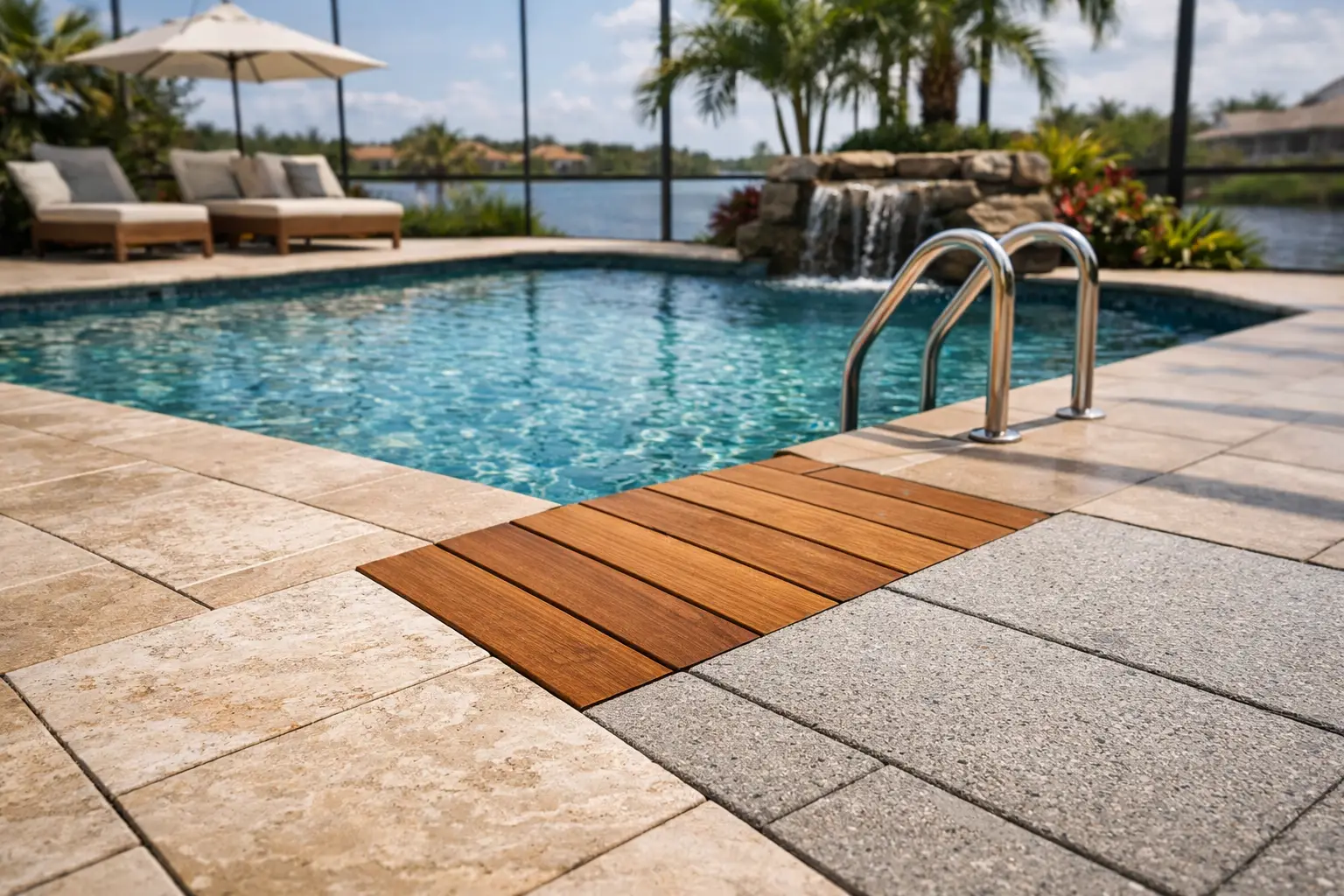
A refined pool deck must do more than frame the water beautifully. In a Florida home, it must stay comfortable underfoot, perform through heavy rain, tolerate pool chemicals and salt exposure, and support the way the property is actually used. A meaningful pool deck material comparison starts with those performance demands, then considers color, texture, scale, and how the deck connects the residence, outdoor kitchen, planting, and views.
For high-investment residential work, material should never be selected from a showroom sample alone. The same pale stone can feel cool, elegant, and forgiving in one installation, yet become difficult to maintain or visually disconnected in another. Site grading, drainage, substrate preparation, joint design, and installation quality are part of the material decision.
What Matters Most in a Pool Deck Material Comparison
A pool deck is one of the hardest-working hardscape surfaces on a property. Bare feet, wet traffic, lounge furniture, dropped glasses, planters, sunscreen, and periodic pressure washing all affect its appearance over time. In Southwest Florida, solar exposure and frequent summer downpours raise the stakes further.
Heat retention deserves early attention. Dark, dense materials can become uncomfortable quickly in direct sun, while lighter colors and naturally textured finishes are generally more practical around water. Slip resistance matters just as much, but it should be achieved with an appropriate finish and drainage strategy rather than an aggressively rough surface that is unpleasant to walk on or difficult to clean.
Water management is often the deciding factor that homeowners do not see until after construction. Decks need intentional slope, properly located drains where necessary, and elevations that protect the residence while avoiding awkward transitions at doors, steps, and the pool coping. A material that is otherwise ideal can disappoint when the drainage plan is treated as an afterthought.
Travertine: A Proven Choice for Warm-Climate Pools
Travertine remains a favored pool-deck material because it has a relaxed, natural character and typically performs well under bare feet. Its porous structure and light color palette can help it feel cooler than many dense manufactured surfaces. Tumbled travertine also provides a naturally softened texture that suits Mediterranean, coastal, transitional, and many contemporary residences.
The trade-off is variation. Travertine is a natural stone, so color, voids, and density differ from piece to piece. Those qualities create authenticity, but they require thoughtful selection and installation. Lower-quality material may have more fill, inconsistent thickness, or a higher likelihood of visible weathering. Homeowners should also expect periodic cleaning and sealing decisions based on the specific stone, finish, exposure, and use of the deck.
Travertine works particularly well when the design calls for broad, calm field areas and a tonal transition from interior flooring to waterline tile. It can be laid in modular patterns for a traditional composition or in larger-format pieces for a cleaner, more current appearance.
Porcelain Pavers: Precise and Low-Maintenance
Porcelain pavers offer a highly controlled look. Their color consistency, large-format options, and resistance to staining make them appealing for modern and architectural pool environments. Quality exterior porcelain has low water absorption and can be easier to maintain than many natural stones, especially around outdoor kitchens and dining areas where spills are more likely.
Not every porcelain product is appropriate for a pool deck. The selected paver needs a finish rated for exterior wet conditions, and its surface texture should be evaluated in person rather than judged by a photograph. A finish that appears suitably textured can still feel slick when wet, especially if sunscreen residue or algae are present.
Installation details are critical. Porcelain is less forgiving of an uneven substrate or poorly executed cuts than thicker natural stone and concrete pavers. Edges, coping transitions, expansion joints, and drain interfaces must be resolved precisely. The result can be exceptionally refined, but only when the construction documents and field execution support that level of precision.
Concrete Pavers: Flexible, Durable, and Design-Driven
Concrete pavers are a practical option with substantial design range. They are available in large slabs, plank formats, textured finishes, and restrained color palettes that can complement both traditional and contemporary architecture. Individual units can also be repaired or replaced more readily than a monolithic poured surface when future work is required.
For pool decks, light-colored pavers with an appropriate textured finish are usually the strongest choice. The installation system matters as much as the paver itself. Proper base preparation, edge restraint, joint material, and drainage prevent shifting, standing water, and premature joint loss. In areas near coastal exposure or heavy irrigation, the selected paver and joint system should also be evaluated for staining and efflorescence potential.
Concrete pavers can offer excellent value without appearing generic. The distinction lies in proportion, layout, border restraint, coping selection, and how the paving aligns with architecture and site geometry. A basic product installed in a disciplined pattern can look more convincing than an expensive material used without a coherent plan.
Natural Stone: Character With Greater Responsibility
Limestone, shell stone, marble, and other natural stones can create a distinctive pool setting that is difficult to replicate with manufactured products. They offer depth, veining, fossil character, and subtle tonal movement. On luxury properties, stone can be particularly effective when it is selected to relate to architectural cladding, interior flooring, or a formal garden structure.
However, natural stone requires material-specific judgment. Some stones are too dense or dark for exposed pool areas. Some finishes can become slippery when wet. Certain stones may etch, stain, or weather unevenly around saltwater pools, planted areas, and outdoor entertaining zones. Sealing is not a universal cure, and it should not be used to compensate for selecting the wrong stone.
A successful stone deck begins with a full-size sample review in outdoor light. It should be assessed when dry and wet, viewed next to the pool tile and coping, and considered against the home’s exterior colors. This is especially valuable when the deck includes several outdoor rooms, where a single material must carry visual continuity across open sun, shade, dining, and circulation areas.
Poured Concrete and Decorative Overlays: Best for Specific Conditions
Poured concrete can be economical, clean-lined, and well suited to large uninterrupted planes. It may be finished with broom texture, exposed aggregate, or a decorative coating system. For some renovations, overlays can refresh a sound existing slab without complete demolition.
The limitation is cracking. Even a carefully detailed concrete deck has control joints, and cracks can develop as the slab moves. Decorative finishes may also fade, wear, or require more regular renewal than stone or pavers. Around a high-end pool, concrete is most successful when its joint pattern is designed deliberately and the finish is chosen for long-term appearance rather than initial cost alone.
Choosing the Right Material for the Site
The best pool deck is rarely determined by one attribute. Travertine may be the right answer for a sun-drenched family pool where cool footing and natural warmth are priorities. Porcelain may better suit a crisp contemporary residence seeking large-format precision and minimal visual variation. Concrete pavers can support a durable, tailored layout where flexibility and future serviceability matter. Natural stone may be worth the added attention when the project calls for a truly distinctive material palette.
Pool type also changes the conversation. Saltwater systems, raised spas, vanishing edges, scuppers, fire features, and complex waterline tile all introduce conditions that affect coping, drainage, and material compatibility. A deck that appears level to the eye may still require carefully controlled fall so water moves away from the house and does not collect at furniture areas or against pool coping.
Color should be considered beyond appearance. Very pale surfaces can reduce heat but may show leaf tannins, food spills, and irrigation staining more readily. Mid-tone materials can be forgiving, though dark colors may increase surface temperature. The most balanced selections often use a light-to-medium field color, limited contrasting bands, and a coping material that provides a crisp but compatible edge at the water.
Design Details That Protect the Investment
A pool deck should be designed as part of a complete exterior composition, not as a separate surface selection. Paver dimensions should align with major door openings, pergola columns, outdoor kitchen lines, and pool geometry whenever possible. This reduces arbitrary cuts and gives the deck a composed, intentional appearance.
Drainage must be coordinated before the paving layout is finalized. Slot drains, deck drains, channel drains, and discreet area drains can all be useful, but each requires the correct elevation and maintenance access. Irrigation should be kept from overspraying paving where possible, particularly near light stone. Planting beds need proper edging and soil containment so mulch and organic debris do not migrate onto the deck.
For projects in Naples and similar coastal Florida environments, field oversight is especially valuable during layout, grading, and the first stages of installation. These are the moments when a well-conceived plan becomes a durable built result. Material quality matters, but precise transitions, slopes, cuts, and joints are what preserve the design over years of use.
Before making a final selection, walk on full-size samples in the afternoon sun, wet the surface, and place it beside the intended coping and tile. The right deck material will feel considered not only on installation day, but also after a summer storm, a full afternoon of entertaining, and many seasons beside the water.