
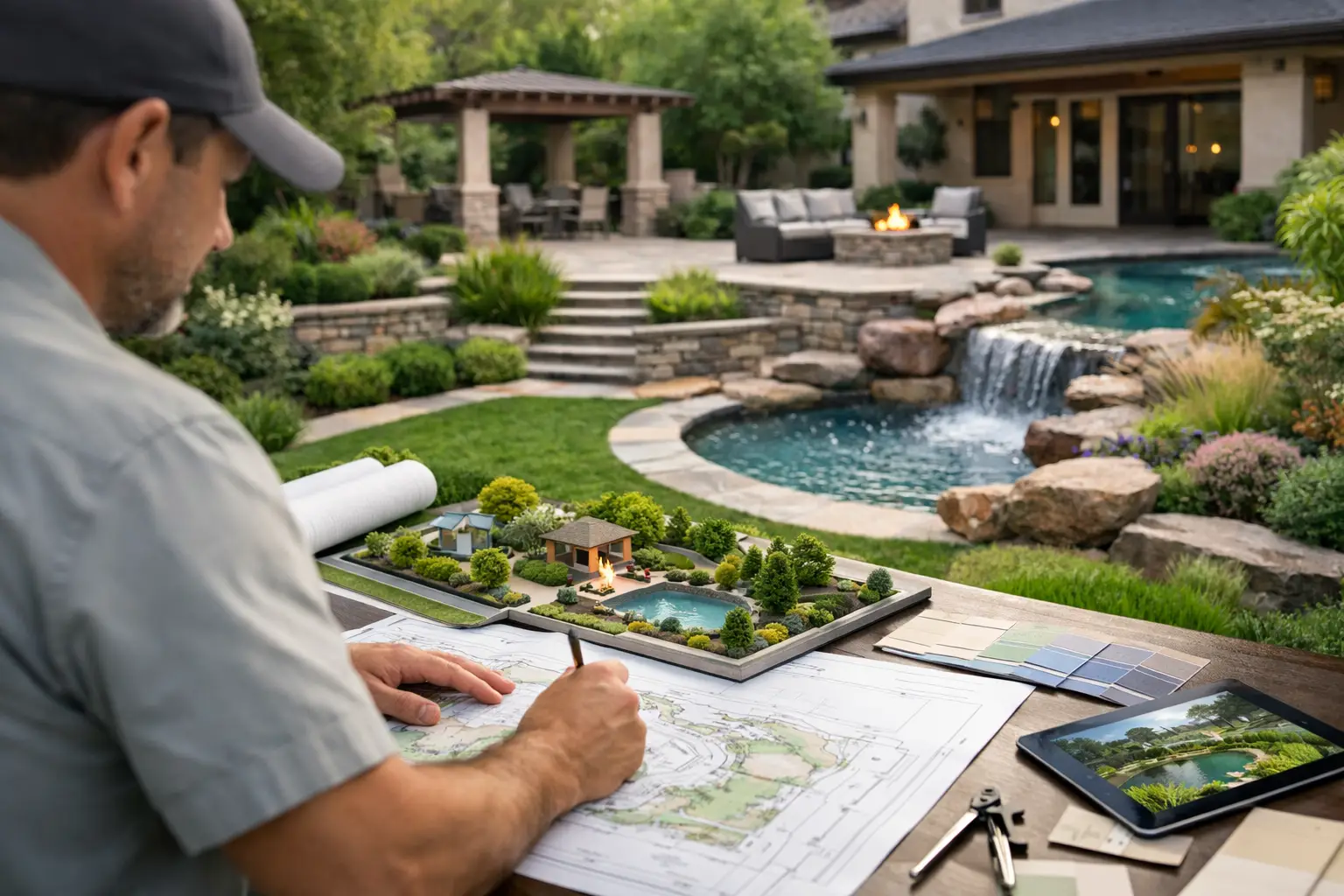
A luxury home can lose value fast when the site is treated as an afterthought. Water stands where it should drain. Driveways feel oversized or disconnected. Planting looks good for one season, then struggles. A custom residential landscape architect addresses those issues before they become expensive corrections, shaping the land and every outdoor element to support the architecture, the lifestyle, and the long-term performance of the property.
For high-end residential projects, landscape architecture is not the same as selecting attractive plants or sketching a patio. It is a design and planning discipline that brings structure to the entire exterior environment. That includes circulation, grading, drainage, hardscape layout, planting design, irrigation, materials, and construction documentation. On a custom home, those pieces need to work together with precision.
Why a custom residential landscape architect matters
The larger the investment in the home, the less room there is for disconnected decisions outdoors. A pool deck may look refined on paper but fail in the field if elevations are not coordinated. A dramatic entry sequence can become impractical if turning radii, guest parking, and walk access are not studied early. Even a beautiful planting concept can underperform if the irrigation plan, sun exposure, soil conditions, and maintenance expectations were never aligned.
This is where a custom residential landscape architect brings value. The role is part creative lead, part technical planner, and part construction-minded problem solver. The goal is not simply to make a property more attractive. The goal is to produce a coherent site plan that supports how the property functions every day while preserving a strong design identity.
That distinction matters most on estates, waterfront properties, and architecturally significant homes where the exterior must feel resolved from every angle. On these projects, outdoor spaces are not filler around the building. They are part of the architecture.
What a custom residential landscape architect actually designs
A serious residential landscape plan usually starts with site organization. That means understanding how the homeowner will arrive, move through the property, entertain, relax, and maintain the grounds. It also means identifying the constraints that shape the design, including setbacks, topography, drainage behavior, views, utilities, and municipal requirements.
From there, the work typically expands into several interrelated layers.
Site planning and spatial layout
This is the framework of the project. It establishes where outdoor rooms belong, how paths and drives connect, where grading transitions occur, and how the site relates to the house. Good site planning makes a property feel intuitive. It creates procession, privacy, and usable space without forcing awkward solutions later.
Hardscape design
Hardscape often carries the strongest visual weight outdoors. Terraces, motor courts, retaining walls, steps, walkways, pool surrounds, and driveway systems all need proportion, material consistency, and construction logic. The right design can elevate the architecture. The wrong one can compete with it or create maintenance problems that surface within a year or two.
Grading and drainage planning
This is one of the least glamorous parts of a project and one of the most important. In Florida especially, drainage cannot be treated casually. Poor grading affects not only lawn and planting performance, but also foundations, paving, usability, and stormwater behavior. A refined landscape depends on water moving where it should, both on the surface and below it.
Planting and irrigation design
Planting design is not decoration added at the end. It should reinforce scale, define edges, frame focal points, soften structures, and support the overall character of the property. Irrigation planning is equally critical. Water application needs to match the plant palette, site conditions, and local climate realities. A landscape that looks exceptional at installation but declines under the wrong irrigation strategy is not a successful design.
Construction documents and implementation support
On custom residential work, intent alone is not enough. Contractors need clear drawings, dimensions, details, and specifications to build accurately. Without that level of documentation, too much is left to interpretation in the field. That usually leads to compromises in layout, material quality, or finish alignment. Strong documentation protects the design and helps keep the project on course.
Design quality is only half the job
Clients often focus first on appearance, which is understandable. They want an outdoor environment that feels tailored to the home and personal to the way they live. But on complex residential projects, visual quality without technical discipline is not enough.
A well-designed landscape architect thinks through buildability from the beginning. Can the proposed paving pattern be installed cleanly at the radius shown? Do the step proportions work with the grade change? Will drainage inlets interrupt a key visual axis? Is the selected planting massing realistic for the mature scale of the property? Those are the questions that separate presentation drawings from real project leadership.
This is also why collaboration matters. The best residential outcomes usually come from close coordination among the landscape architect, home architect, builder, engineers, and specialty consultants. If the site design develops in isolation, problems tend to surface late, when they are more expensive to resolve.
When to bring in a residential landscape architect
Earlier is better. Ideally, landscape architecture begins while the home and site are still being planned, not after the building footprint is locked and construction is well underway. Early involvement allows the exterior to shape key decisions such as finished floor elevations, drainage strategy, drive alignment, utility placement, and view management.
That does not mean every homeowner needs a full landscape design package on day one. It depends on the property and the scope. A major custom residence, a significant renovation, or a site with grading and water management challenges benefits from early comprehensive planning. A smaller refresh may require a more targeted approach. The point is that landscape design should be calibrated to the investment and the complexity of the site.
What affluent homeowners should look for
Not every designer who works outdoors is equipped for custom residential landscape architecture. For high-value properties, homeowners should look for a professional who can show both design fluency and technical depth.
Experience with complex residential projects is essential. So is the ability to produce detailed plans, coordinate with other disciplines, and remain involved during implementation. Renderings and concept images can be useful, but they should be backed by practical knowledge of grading, materials, irrigation, permitting, and field conditions.
It is also worth paying attention to process. A strong landscape architect will ask detailed questions about how the property needs to function, how the owners intend to use it, and what level of maintenance they expect. They will not rush to a plant list or patio shape without understanding the larger framework first.
In a market like Naples, where many properties combine architectural ambition with demanding site conditions, that level of rigor is not a luxury. It is a safeguard.
The value of a custom residential landscape architect over time
A well-executed site plan pays off in ways that are easy to miss at the start. It supports smoother construction, reduces preventable rework, and helps avoid the piecemeal additions that make a property feel unresolved. It can also improve day-to-day living in practical ways, from cleaner circulation and better drainage to more comfortable outdoor rooms and stronger visual privacy.
There is also a property value component. Buyers notice when exterior spaces feel intentional and integrated with the residence. They also notice when they do not. While landscape architecture should not be reduced to resale math, a custom-designed landscape does contribute to the overall quality and market position of a home.
For firms like Nova LA Designs, the work is strongest when artistry and technical control are treated as equal priorities. That balance is what allows a landscape to look refined on paper, perform in the field, and still feel right years later.
Choosing the right scope for your project
Not every property needs the same level of intervention. Some sites call for complete master planning, detailed construction documents, and ongoing oversight. Others need a focused redesign of arrival sequence, drainage correction, or a more disciplined planting and hardscape strategy. The right scope depends on the existing conditions, the construction timeline, and how much coordination is required across the project team.
What should stay constant is the standard of thinking behind the work. A custom residential landscape architect should bring clarity where a project is complex, restraint where a site is already strong, and technical confidence where decisions carry long-term consequences.
When the exterior of a home is planned with that level of care, the result is not just a better-looking property. It is a site that feels composed, works properly, and reflects the quality of the investment from the ground up.