
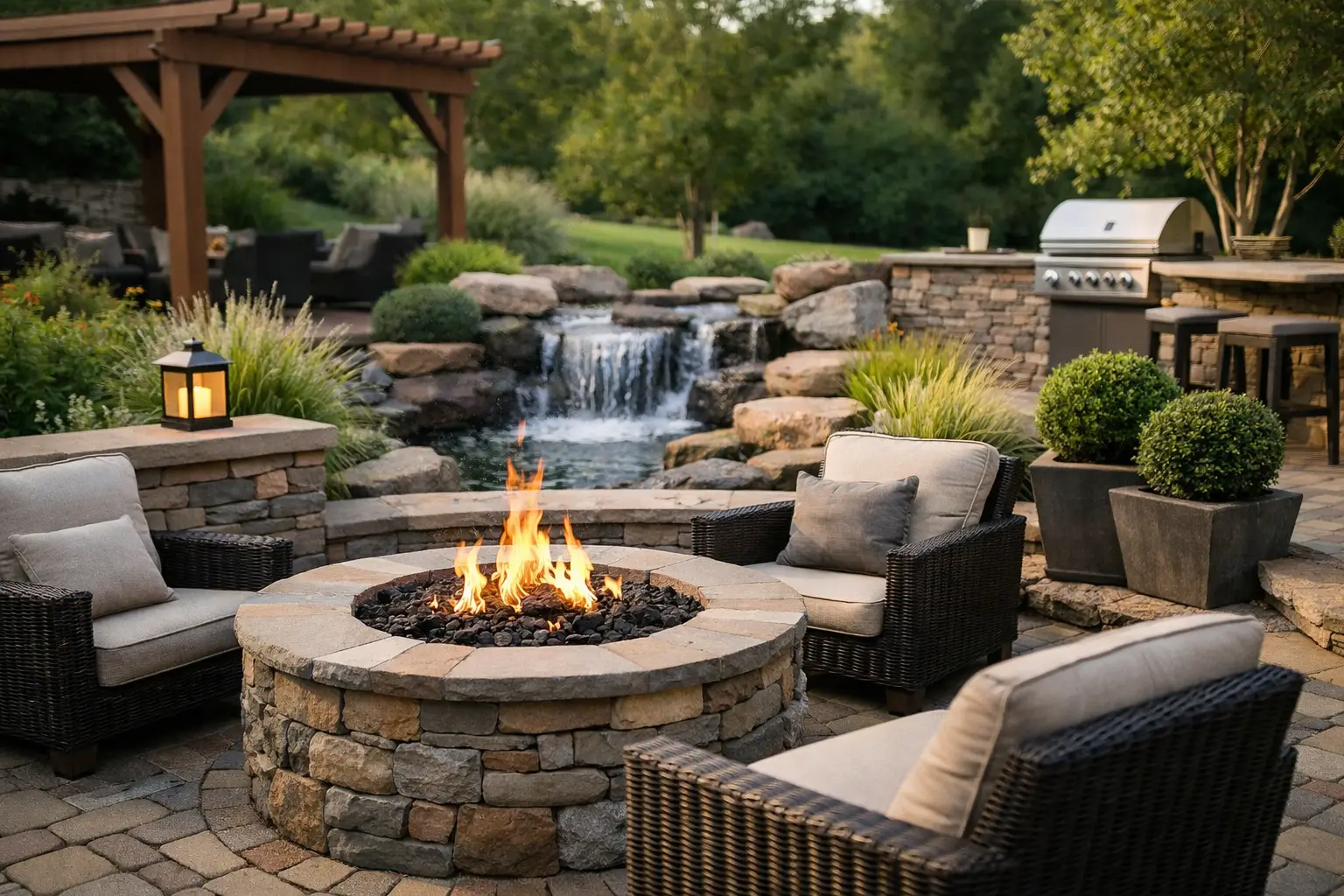
A backyard can look expensive and still feel unresolved. The patio is oversized, the walkways go nowhere useful, drainage becomes obvious after the first storm, and the materials that looked appealing in a sample start competing with the house instead of supporting it. That is why hardscape designs for backyards deserve the same level of planning as the architecture itself.
In high-value residential projects, hardscape is not a decorative afterthought. It shapes circulation, defines outdoor rooms, manages grade changes, supports drainage strategy, and determines how the landscape will be used every day. When it is planned correctly, the result feels calm, intentional, and durable. When it is not, even quality materials can look disjointed.
What strong hardscape designs for backyards actually do
The best backyard hardscape does more than install a patio and call it finished. It organizes the site. A dining terrace should relate to the indoor kitchen or great room. A pool deck should create enough usable space without overwhelming the water feature. Garden paths should move people naturally through the property rather than forcing circulation after the fact.
Good design also accounts for proportion. A large custom home needs hardscape scaled to the architecture, but scale is not the same as excess. Oversized paved areas can flatten a property and increase heat gain, glare, and runoff. On the other hand, undersized terraces often leave furniture cramped and circulation awkward. The correct balance depends on how the backyard will actually function.
Material choice matters, but layout matters first. Travertine, shell stone, porcelain pavers, natural stone, and concrete products all have a place. None of them can solve a poor plan. If the spaces are right, the material palette can elevate the design. If the spaces are wrong, premium finishes simply make mistakes more expensive.
Start with use, not product
Many backyard projects begin with a product request. The owner wants large-format pavers, a fire feature, synthetic turf accents, or a summer kitchen. Those requests may all be valid, but they should come after a more basic question: how should the site perform?
A backyard designed for frequent entertaining has different needs than one intended for quiet daily use. A family that hosts large holiday gatherings may need broader transitions between indoor and outdoor spaces, stronger service access, and durable paving near cooking areas. A homeowner who values privacy and visual order may prefer fewer, more refined hardscape zones with stronger planted edges.
This is where experienced planning changes the outcome. The right design process studies views from inside the house, solar exposure, grading, drainage patterns, and the relationship between architecture and site. It also considers maintenance expectations. Some clients want a highly detailed landscape with multiple programmed spaces. Others want restraint and ease of care. Both can be successful, but they should not be designed the same way.
The site will always have the final word
In Florida, this is especially true. Soil conditions, seasonal rain, drainage requirements, and pool and structure relationships all influence what a backyard can support. Elegant hardscape must still move water correctly.
That is one of the most common gaps between concept and reality. A beautiful patio layout on paper may fail if grading is unresolved. Retaining edges, deck elevations, slot drains, area drains, and transitions to lawn or planting beds need technical coordination early. If they are forced in later, the result often looks compromised.
Grade changes also affect comfort and safety. Even subtle elevation shifts need careful detailing at steps, landings, and thresholds. This is not just a construction issue. It is a design issue. The most refined hardscape designs for backyards often look simple because the difficult technical decisions were handled before construction started.
Choosing materials with discipline
Luxury projects do not require a large number of materials. In fact, restraint usually produces a stronger result. One primary paving material, one accent material, and a carefully edited set of complementary finishes often create more visual confidence than a busy mix of textures and colors.
The architecture should lead. A coastal contemporary home may call for clean joint lines, lighter tones, and crisp detailing. A Mediterranean or transitional residence may support a warmer stone palette and more articulated edges. The goal is not to match every finish exactly. It is to establish a clear relationship between house and landscape.
Performance should guide the final selection. Natural stone can be beautiful, but some varieties weather and stain differently than clients expect. Porcelain can offer consistency and low absorption, but it may not suit every setting. Concrete pavers can be cost-effective and durable, though their success depends heavily on profile, color selection, and installation quality. The right answer is rarely universal.
Outdoor rooms need boundaries, not clutter
Backyard hardscape works best when it creates defined spaces with a reason to exist. That may include a pool terrace, dining court, lounge area, garden walk, arrival court, or service zone. The mistake is trying to include every possible feature without giving each one enough room or enough separation.
Boundaries do not need to be heavy-handed. They can be established through paving direction, seat walls, low grade changes, planter edges, overhead structures, or strategic planting. The purpose is to make each area feel intentional while preserving a coherent overall plan.
A well-designed backyard usually has a hierarchy. There is a primary space that anchors the composition, secondary spaces that support it, and quieter transitions between them. Without that hierarchy, the yard becomes a collection of amenities rather than a designed environment.
The details that separate a custom plan from a generic one
At a glance, many patios look similar. The difference appears in the detailing. Joint alignment with architectural lines, clean edge conditions, appropriate coping selection, integrated drainage, lighting coordination, and precise transitions to turf or planting areas all influence whether the finished work feels custom.
Construction documentation matters here. If the hardscape is meant to align with column bays, door openings, pool geometry, or view corridors, those relationships need to be dimensioned and communicated clearly. Vague layout intent invites field improvisation, and field improvisation is rarely where premium design improves.
This is also where accountability matters. Design oversight during implementation helps protect the original intent and identify issues before they become visible compromises. On complex residential sites, the strongest results come from collaboration between the landscape architect, builder, and specialty trades, with someone clearly responsible for maintaining design discipline.
When simpler is better
Not every backyard needs multiple paving patterns, decorative inlays, elaborate walls, and a long list of built features. In many high-end projects, confidence comes from editing. Fewer materials, cleaner geometry, and stronger spatial relationships often age better than trend-driven installations.
That does not mean minimalism is always the answer. Some properties benefit from richer expression, especially where the architecture is more formal or the site has a distinctive historic or regional character. The point is that hardscape should respond to the property rather than imitate a trend board.
For clients investing significantly in a home, longevity usually matters more than novelty. A backyard should still feel considered years after installation, not tied to a short-lived design fashion.
Budget, value, and where not to compromise
Hardscape is a meaningful investment, and budget decisions should be made with clarity. It often makes sense to simplify square footage or reduce the number of specialty elements before compromising subgrade preparation, drainage planning, layout precision, or material quality in primary use areas.
There are smart trade-offs. A project may reserve premium stone for focal spaces and use a compatible secondary surface elsewhere. A seat wall may provide more long-term value than an oversized decorative feature. A better layout with fewer elements can outperform a crowded design with a larger budget.
What tends to cost the most is correction. Reworking drainage, replacing failed paving, or addressing settlement after installation is far more disruptive than making disciplined planning decisions at the start. For that reason, the most valuable hardscape work is often the least visible – grading coordination, detailing, and documentation that prevent future problems.
Why design and engineering judgment belong together
Backyard hardscape sits at the intersection of aesthetics and site performance. That is why the strongest outcomes come from a design process that respects both. Creative ideas are essential, but they must be supported by constructible details, code awareness, and a clear understanding of how water, materials, and human use will affect the space over time.
For homeowners, architects, and builders, that balance is what turns a backyard into a finished environment rather than an accumulation of separate improvements. Firms such as Nova LA Designs approach hardscape with that broader responsibility in mind – not just how it looks on presentation day, but how it fits the site, supports construction, and holds up in real use.
A well-planned backyard should feel inevitable, as if every terrace, path, wall, and transition belongs exactly where it is. That kind of clarity rarely comes from adding more. It comes from making better decisions early.