
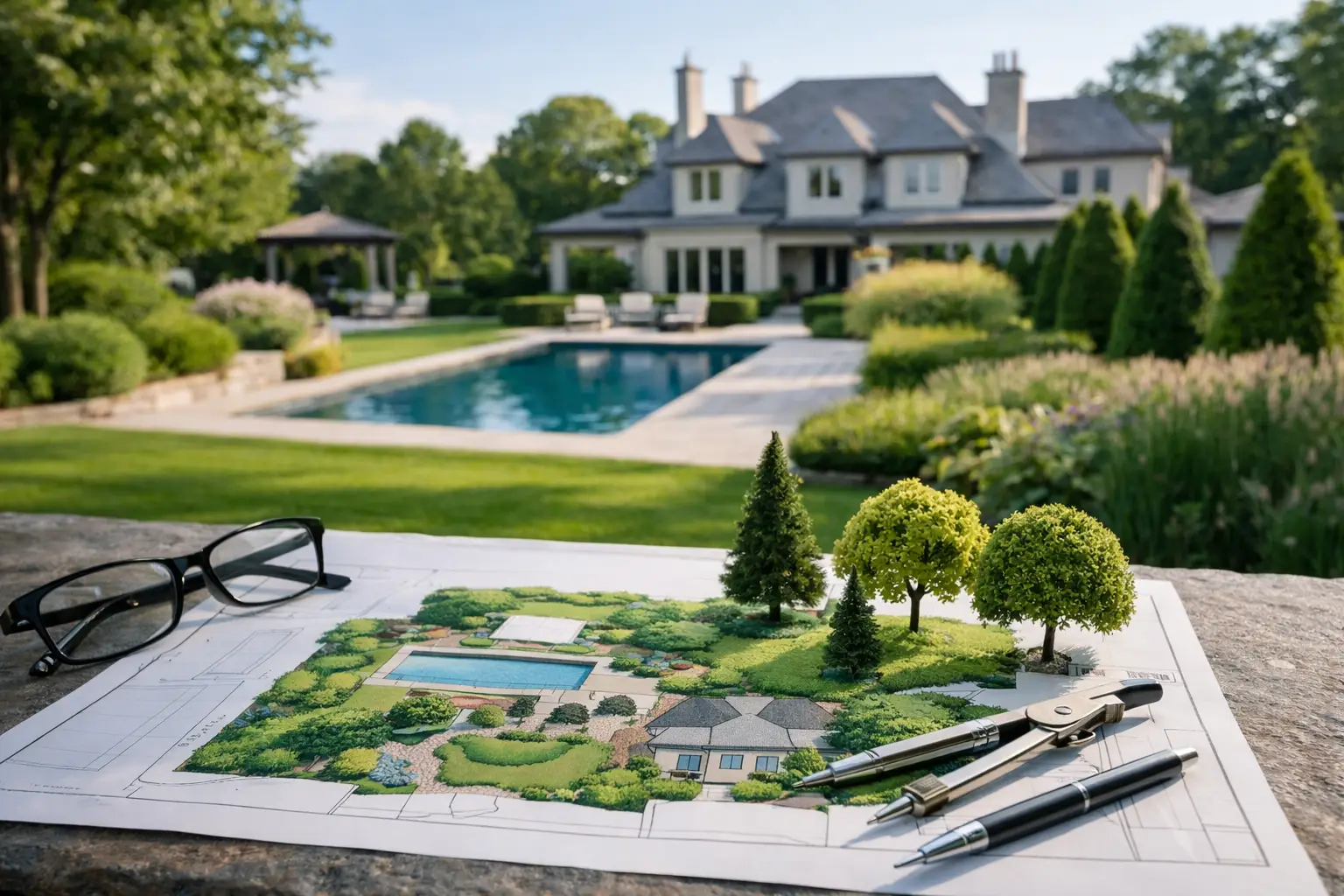
An estate landscape rarely fails because of one bad plant choice. More often, it underperforms because the planning started too late, too narrowly, or without enough technical discipline. If you are asking how to plan estate landscaping, the right place to begin is not with a plant palette or a patio finish. It starts with the property itself – how it drains, how it is used, what the architecture demands, and what level of performance you expect over time.
On larger or high-value residential properties, the landscape is part of the architecture. It frames arrival, organizes views, manages circulation, supports privacy, handles water, and shapes daily experience outdoors. The visual result matters, but the planning behind it matters more.
How to Plan Estate Landscaping From the Ground Up
The most effective estate landscapes are built from a hierarchy of decisions. First comes site analysis, then land use, then infrastructure, and only after that the aesthetic layers that most people notice first. Reversing that order often leads to expensive corrections.
A serious planning process begins with a detailed reading of the site. That includes topography, existing trees, drainage patterns, solar exposure, prevailing wind, privacy conditions, architectural style, and neighborhood context. On waterfront, golf course, or preserve-adjacent properties, views and setbacks may become major design drivers. On inland estates, grading and stormwater movement may have a stronger influence than the owner initially expects.
This early phase also clarifies constraints that should shape the design before construction documents begin. Easements, local codes, utility locations, driveway geometry, and pool placement can all affect what the landscape can realistically support. Good planning reduces surprises. Great planning prevents them.
Start With Estate Use, Not Decoration
Estate owners often want the grounds to feel refined, private, and established. Those are valid goals, but they are outcomes, not planning criteria. Before materials and planting are discussed in detail, the property needs a use framework.
Ask how the estate will actually function. Is the front arrival intended to be formal and symmetrical, or quiet and understated? Will the outdoor space support large-scale entertaining, family recreation, guest accommodations, wellness amenities, or all of the above? Does the owner want broad lawn panels, intimate garden rooms, a motor court, a detached pavilion, or service areas screened from primary views?
These questions may sound conceptual, but they have technical implications. A property designed for frequent entertaining needs circulation that works for groups, lighting that supports evening use, and drainage that performs under large paved areas. A more private retreat may prioritize layered screening, sound buffering, and controlled view corridors. The right answer depends on how the estate is meant to be lived in.
Build the Framework Before the Planting Plan
On estate projects, hardscape and site infrastructure usually set the success of everything else. Driveways, walks, retaining elements, terraces, steps, drainage systems, irrigation zones, and grading transitions should be coordinated early. Planting cannot correct poor geometry or weak water management.
This is especially true when the home and site are being developed together. Landscape planning should not be treated as a final decorative package after architecture and engineering are complete. It should move in parallel with them. That coordination affects finish floor elevations, stormwater strategy, pool deck relationships, outdoor room sizing, and how the house meets the land.
A well-planned framework also supports the estate as it matures. Trees need adequate soil volume. Hedges require width allowances. Paved surfaces need proper base preparation and slope. Irrigation needs to reflect hydrozones rather than a one-size-fits-all layout. These are not glamorous decisions, but they separate landscapes that age gracefully from those that become maintenance-heavy within a few seasons.
Grading and Drainage Deserve Early Attention
If there is one area where estate landscape planning often becomes reactive, it is drainage. Yet drainage is foundational. Poor runoff patterns can affect planting health, hardscape longevity, lawn quality, and even the usability of outdoor spaces after typical weather events.
In Florida, where heavy rains and high water tables can complicate site performance, grading and drainage plans need to be integrated into the design from the beginning. That may involve subtle contouring, area drains, swales, permeable zones, or stormwater structures that are visually quiet but technically precise. The best drainage solutions do not draw attention to themselves. They simply allow the estate to function as intended.
Hardscape Should Match the Architecture
Estate hardscape is not just about material luxury. It is about proportion, alignment, and permanence. The width of a walkway, the turning radius of a driveway, the relationship between terrace edges and planting beds, and the scale of a stair all influence whether the landscape feels resolved.
A Mediterranean-inspired residence, a coastal contemporary home, and a classic formal estate each call for different hardscape language. Materials should feel appropriate to the architecture and climate, but they also need to perform under local conditions. Some finishes photograph beautifully and weather poorly. Others are more forgiving and age with character. Planning well means understanding that trade-off before specifications are finalized.
How to Plan Estate Landscaping for Privacy and Views
Privacy and openness are often in tension. Many estate owners want both. They want strategic enclosure from neighboring properties while preserving long views from key interior rooms and outdoor living areas. Achieving that balance requires more than planting a perimeter hedge.
The better approach is layered spatial planning. Use trees, hedges, walls, grade changes, and structure placement to create selective screening rather than blanket separation. A motor court may need stronger enclosure than a rear lawn. A primary suite may require filtered privacy, while a pool terrace may need open exposure to a preferred view.
This is where three-dimensional thinking matters. What blocks a view from standing height may not block a second-story line of sight. What feels private at installation may become too dense after a few years of growth. CAD planning and visual modeling can be especially helpful when the estate has multiple structures, long axes, or complex sightlines.
Planting Should Support Structure, Not Compete With It
A sophisticated estate planting plan does more than add color. It reinforces hierarchy across the property. Specimen trees define moments. Mass plantings unify broad areas. Foundation planting softens architecture without obscuring it. Accent material should be used with restraint.
On larger properties, planting strategy also needs to account for maintenance reality. High-detail gardens can be appropriate near arrival courts, entries, and primary living areas, while secondary zones may call for simpler, durable masses with strong form and fewer seasonal demands. That contrast is often more effective than treating every part of the estate with the same intensity.
Regional suitability matters as well. In Florida, plant selection must respond to heat, humidity, storm exposure, salt tolerance in some locations, and irrigation demands. A beautiful plan on paper is not enough. The planting palette has to perform in the actual environment and at the maintenance level the owner intends to sustain.
Coordinate Lighting, Irrigation, and Documentation
Luxury landscapes often lose quality in execution when technical systems are left vague. Lighting and irrigation should not be afterthoughts. They should be designed as part of the estate composition.
Landscape lighting influences security, arrival sequence, nighttime architecture, and the usability of terraces and garden paths. Too little light creates dead zones. Too much light flattens the design and can make a property feel commercial rather than refined. The goal is selective emphasis and comfort.
Irrigation planning should be equally disciplined. Estate properties typically include multiple microclimates and different water needs across lawn, planting beds, containers, and specialty gardens. Irrigation design needs to account for those differences with zoning, coverage, and control strategies that support plant health without waste.
Construction documentation also deserves more respect than it often receives. On high-investment properties, clear plans help align contractors, protect design intent, and reduce field improvisation. That documentation is where experience shows.
Budget for Quality, Phasing, and Maturity
The question is not simply how much estate landscaping costs. The better question is how the budget should be allocated for long-term value. Some owners benefit from completing the full scope at once, especially when hardscape, grading, and site access are tied to active construction. Others may choose a phased approach, installing the structural framework first and expanding specialty gardens later.
Neither approach is automatically better. It depends on the project schedule, construction sequencing, cash flow priorities, and how finished the estate needs to feel at occupancy. What should not be phased carelessly are the systems and foundational moves that are difficult to retrofit later.
It is also worth planning for maturity, not just installation day. Young trees, newly laid turf, and fresh planting beds can look clean but not yet complete. A strong design anticipates growth and understands how the estate should read in three years, five years, and beyond.
The most successful estate landscapes are not assembled from isolated features. They are planned as integrated environments where beauty, function, and technical performance support each other from the start. If the property is significant, the planning should be equally serious. That is what gives an estate landscape its staying power – not excess, but discipline applied with taste.